
How to Build Better Habits with AI: A Comprehensive Guide for 2025
Imagine a world where your morning routine is as seamless as your smartphone’s latest update, no more hitting snooze or skipping workouts. That’s the transformative power of technology for habits! As an AI Developer who’s spent years experimenting with digital habit formation, I’ve cracked the code on how to build better habits with AI.
Picture this: a personalized AI habit assistant that nudges you at just the right moment, offering AI habit reminders and smart habit development tips tailored to your unique lifestyle. It’s like having a personal coach in your pocket, guiding you toward habit success with unparalleled precision. Building on what I covered in how to use AI for productivity, AI-driven habits are not just a futuristic concept, they’re today’s reality.
In this guide, you’ll discover step-by-step strategies to optimize your life using AI habit tools, habit tracking AI, and AI motivation techniques. From setting clear habit goals to choosing the right AI habit apps, you’ll learn how to leverage AI for habit improvement and transformation. Ready to revolutionize your daily routine? Let’s dive in and explore the digital habit formation techniques that will set you on a path to lasting change.

Step-by-Step Instructions to Build Better Habits with AI
Building better habits is no longer a formidable challenge, thanks to AI technology. I’ve seen firsthand how implementing AI tools can make a night-and-day difference in shaping habits effectively. It’s like having a personal coach that’s always around, pushing you to do better, smarter, and more efficiently. Here’s a step-by-step guide on how to build better habits with AI, based on my own journey as an AI Developer.
Identify Your Habit Goals
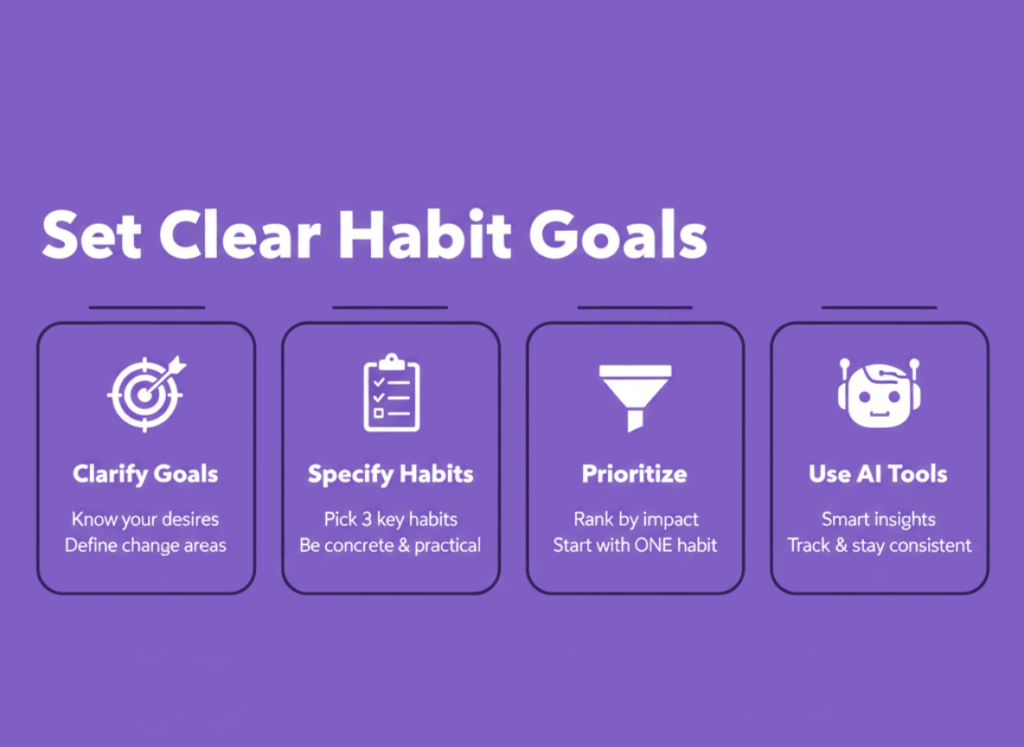
When it comes to building better habits, you’ve got to start with clarity. I remember the countless hours I spent figuring out what changes I wanted in my freelance routine. Before you dive into digital habit formation, take a step back and truly understand your desires. This is ESSENTIAL!
Determine Specific Habits
You need to focus on what specific habits you want to form or change. When I shifted from working at a corporate job to freelancing, my initial goals were all over the place, honestly, I was a bit frazzled. Here’s where habit building starts:
- Identify the habits you want to change or form. Whether it’s waking up earlier, exercising regularly, or maintaining client communication, be specific.
- Jot down at least 3 habits that resonate deeply with your daily life.
Using an AI habit assistant can make a meaningful difference. It reviews your routine and offers practical suggestions for improvement. I used to jot notes on paper, but now an AI analysis gives me more useful insight in minutes than I ever managed on my own.
Prioritize Habits
You can’t tackle everything at once. Trying to do too much often leads to burnout, that was my rookie mistake. Instead, think about:
- Rank the habits based on importance and impact.
- Focus on ONE habit that aligns the most with your goals and lifestyle.
- Use a tool or an AI habit planner to assist in organizing these priorities.
This was the biggest lesson I learned: start small and iterate.
When I leveraged AI habit transformation tools, it was like looking at my chaotic routine through a lens of logic and support. It wasn’t about just doing more; it was about doing better. I was able to focus on the habits with the most potential for positive change.
Use AI Tools for Habit Goals
Incorporating AI tools into your habit strategy is NOT JUST A HYPE. These tools can change how you perceive and set goals, offering a smart habit development path. I recall using an AI habit app that provided behavior change insights and it opened my eyes:
- Habitica and Coach.me offer interactive habit tracking and motivation techniques.
- Beeminder hooks you with monetary stakes if you stray from your goals.
| AI Tool | Features | Best For |
|---|---|---|
| Habitica | Gamification | Fun engagement |
| Coach.me | Coaching & Feedback | Personal development |
| Beeminder | Monetary stakes | Serious commitment |
With these AI habit tracking apps, I realized why the digital world is with us, transform habits efficiently without the constant second-guessing. These tech-powered tools analyze your data, support with AI habit goals, and provide timely AI habit reminders, ensuring consistency.
At times, I marveled at the AI habit assistant which felt like a virtual mentor. It was this casual yet persistent nudge that kept me on track, echoing the importance of setting clear habit goals.
Remember: Clarity is key, and AI can help you achieve it effortlessly.
By identifying your habit goals and integrating them effectively with AI guidance, you set yourself on a path to not just accomplish more, but to grow and adapt dynamically. Trust the process. Trust the tech. AN AI PARTNER MAKES IT ALL MANAGEABLE.
Choose the Right AI Tools
Choosing the right AI habit tools can significantly shape your progress. I’ve spent many late nights sorting through countless options, and the right choice truly separates steady improvement from getting stuck. Here’s how I approached the process.
Research AI Habit Tools
I spent a whole week researching AI tools dedicated to habit building, and goodness, it felt like drinking from a firehose! My experience taught me that there’s an ocean of apps designed for digital habit formation, each promising to revolutionize your routine.
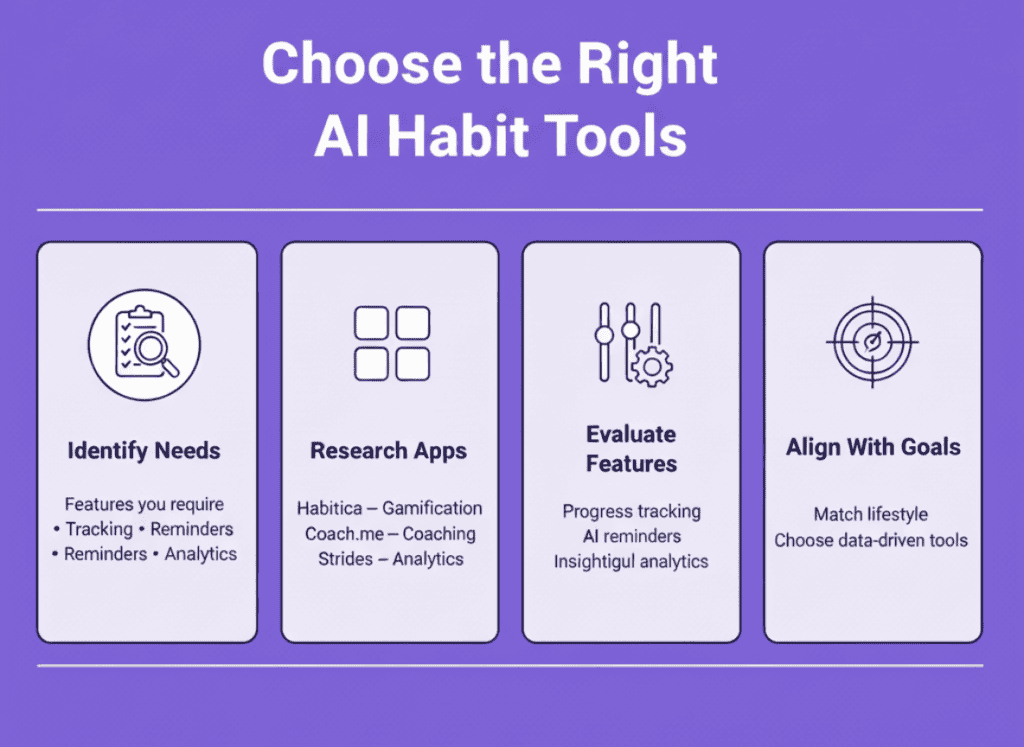
- Identify Your Needs: Start by listing what features you need, tracking, reminders, analytics, or more?
- Research AI Habit Apps: Look out for apps like Habitica, Coach.me, and Strides.
Here’s what set them apart:
| AI Habit App | Features | Best For |
|---|---|---|
| Habitica | Gamification | Engaging habit building |
| Coach.me | Coaching & Feedback | Personalized development |
| Strides | Detailed Analytics | Data-driven goals |
Evaluating these apps against my goals gave me a birds-eye view of what each app could do. The key for me was using AI habit systems that matched my needs, focusing on robust data analytics to provide meaningful feedback.
Understanding your specific needs will guide you to the right match in the AI tool carousel.
Evaluate Features & Align With Goals
Once you’ve selected your potential tools, it’s time to dig into their features and see how they align with your personal goals. This was CRUCIAL for me, as finding a tool that resonated with my lifestyle was essential.
- Habit Tracking AI: I found that some tools excel in tracking progress and offering insights.
- AI Habit Reminders: Timely nudges that keep you on track are priceless.
- Analytics and Feedback: Look for tools that provide useful data and insights to optimize habits.
Personalizing my AI habit assistant was like turning on the lights in a dim room. It clarified more about myself and what strategies worked best for me.
This was the moment of clarity: the right AI habit coach doesn’t just meet you halfway; it walks the path with you.
Choosing tools that provide AI-driven habits and monitoring, backed by solid analytics, ensured that my efforts were always in line with my bigger picture. It’s not merely about data; it’s about meaningful interpretations that spark growth.
With these strategies, I wasn’t just aimlessly picking apps, I was creating a structured approach toward habit change with AI. The more aligned these tools are with your personal aim, the smoother the transition becomes.
Jump in, experience, and trust AI’s assistance. Before long, like me, you’ll realize the power behind how to build better habits with AI tailored to your unique needs.
Integrate AI into Your Routine
I remember the first time I incorporated an AI habit assistant into my day; IT MADE A LASTING IMPACT. It felt like having a tiny, intelligent sidekick that nudged me towards productivity without even realizing it.
Set Up AI Tools Seamlessly
Getting AI tools to fit into your existing lifestyle without disrupting it was incredibly important for me. Nobody wants to feel bogged down by new tech. Instead, the goal is for AI to act as a gentle push that optimizes your day.
- Start Small: Introduce one AI habit app at a time. Trust me, I learned this the hard way by trying too many at once.
- Customize Settings: Most AI habit apps offer settings to tailor reminders and prompts. Make them fit YOUR schedule.
- Sync with Current Tools: Integrate AI tools with your existing apps like Google Calendar or Slack for a smooth transition.
The key insight: AI should feel like a natural extension of your daily routine, not an added weight.
For me, utilizing technology for habits meant finding the right balance between intervention and ease. Once I adjusted my AI habit reminders to nudge me gently, I found my day flowed with consistency and purpose.
Utilize AI Reminders and Prompts
The power of AI habit tools lies in their subtle, continuous reminders. Imagine not just keeping up with tasks but actually ENJOYING the process. That’s what happened when I properly used AI habit prompts.
- Habit Adherence: Setting up automated prompts helps reinforce new habits without conscious effort.
- Motivational Nudges: Many AI habit apps provide motivational quotes and encouragement that genuinely lifted my spirits on difficult days.
- Timed Reminders: Schedule reminders to align with your peak productivity times for maximum impact.
| AI Prompt Feature | Benefits | My Experience |
|---|---|---|
| Timed Nudges | Ensure consistency | Felt less guilty skipping tasks |
| Motivational Quotes | Daily inspiration | Uplifting and engaging |
These AI-driven habits became crucial in maintaining not just productivity but in cultivating a POSITIVE and energizing routine. My interactions with behavior change AI tools showed how small nudges could lead to big improvements.
Leverage Data and Insights for Motivation
One of the most powerful aspects of using AI habit evaluation is the data it provides. This isn’t just numbers, they’re insights that propel you forward. I discovered patterns in my behavior that I hadn’t noticed before, leading to smarter decisions.
- Track Progress: Use AI habit analysis features to visually see how far you’ve come. It’s empowering.
- Detail Insights: Apps provide detailed graphs and feedback that clarify where improvement is needed.
- AI Habit Suggestions: Based on your data, these tools often suggest new approaches or habits.
Seeing progress mapped out was incredibly motivating: “THIS CHANGED EVERYTHING for me.”
With AI-driven analytics, I was able to transform my routine by making data-backed choices, turning mundane tasks into achievable challenges. The tech did more than provide guidance, it challenged me to up my game.
Integrating AI efficiently means letting these digital habit formation tools seamlessly weave into your life. The real magic happens when AI doesn’t feel like tech but like an invisible partner helping you towards your goals. Looking back, I realize how AI habit transformation wasn’t just about new goals but forming a better version of myself.
Monitor Progress with AI Feedback
Incorporating AI into habit monitoring has been a HUGE boost in how I track, and ultimately perfect, my routines. Imagine having a personal coach to guide you, offering insights and data, anytime you need it. AI feedback makes the journey to building better habits with AI more streamlined and efficient.
Regularly Review Habit Progress Using AI Analytics
Tracking habit progress using AI tools has become a crucial step in my routine. Previously, I relied on manual tracking, which was often unreliable and inconsistent. The shift to AI habit tracking apps changed EVERYTHING.
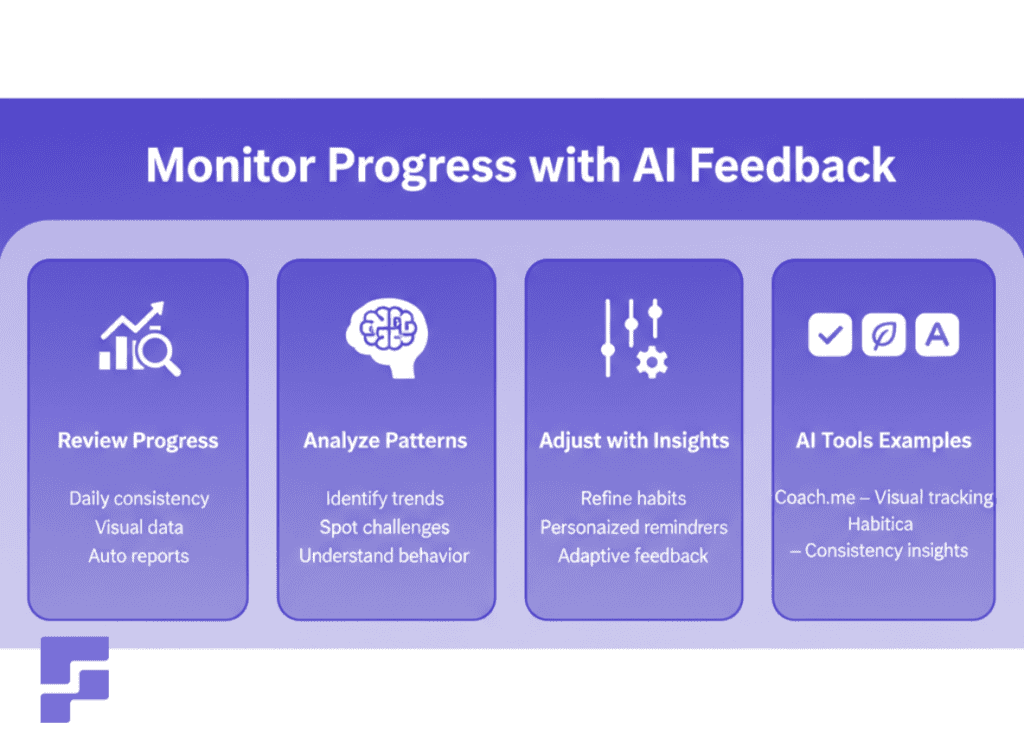
- Consistent Feedback: AI habit systems provide daily updates on habit consistency. This feedback loop is invaluable.
- Visual Data: Tools like habit tracking AI apps offer charts and graphs that represent your progress visually. It’s like watching your growth in real-time.
- Automated Reports: Many AI habit assistant apps send automated reports on your habit efficiency and consistency.
| AI Tool | Feature | Benefit |
|---|---|---|
| Coach.me | Visual Data | Clear progress tracking |
| Habitica | Feedback Loop | Habit consistency insights |
Understanding data-driven progress is not just motivating, it’s enlightening.
Reflecting on my progress with AI has given me clear, concrete feedback instead of relying on guesswork about where I’m improving or falling behind.
Use AI-Generated Feedback to Understand Patterns and Challenges
AI-generated feedback is a powerful tool for recognizing recurring patterns and challenges. Before using AI, I often felt like I was fumbling in the dark, trying to understand why certain habits weren’t sticking. With AI habit analytics, the reasons become clearer.
- Pattern Recognition: AI identifies patterns in your behavior, such as the time of day when you’re most productive.
- Challenge Identification: Pinpoint specific challenges in maintaining new habits. For instance, I discovered that weekends were my weak spot for productivity.
- Behavioral Adjustments: Tailor your schedule or routine based on AI habit insights to improve outcomes.
This was the biggest lesson I learned: AI isn’t just about tracking, it’s about understanding.
For me, these AI-driven insights meant I could tackle specific challenges with newfound clarity and confidence, making habit change more than just guesswork.
Adjust Habits Based on Data-Driven Insights to Maximize Effectiveness
Utilizing AI habit suggestions allows for a tailored approach to habit modification. It’s like having an AI habit coach nudging you toward better avenues every day. Over time, I’ve found that using these informed strategies has led to consistent improvement.
- Data-Driven Adjustments: Use insights to tweak daily habits for maximum effectiveness.
- Custom AI Habit Support: Let AI customize reminders and prompts that align with your lifestyle.
- Adaptive Feedback: Continue adapting habits as AI feedback evolves, keeping your routine dynamic and effective.
By monitoring habits through AI habit analysis, I experienced profound transformations. It was like having a roadmap for success designed uniquely for me, driven by daily insights and feedback.
The takeaway here is plain yet profound: Let AI habit solutions steer your habit change journey.
The more I engaged with AI feedback, the clearer the path became. The adaptability and precision offered by AI made habit formation technology less about effort and more about STRATEGY. Remember, success isn’t just about making changes, it’s about making the RIGHT changes.
Adjust and Optimize Your Approach
Adjusting your habit-building strategy isn’t just about tweaks, it’s about finding what truly resonates with you. When I began my own journey into digital habit formation, I realized the need to continually adapt and optimize my methods. It was like discovering a NEW level of efficiency with AI on your side. Let’s explore some strategies to help you refine your approach.
Make Necessary Adjustments to Your Habit-Building Strategy
In the beginning, my strategies were rigid; I expected a one-size-fits-all approach to work. But soon enough, it became clear that flexibility was key. Adjusting my strategy required some trial and error.
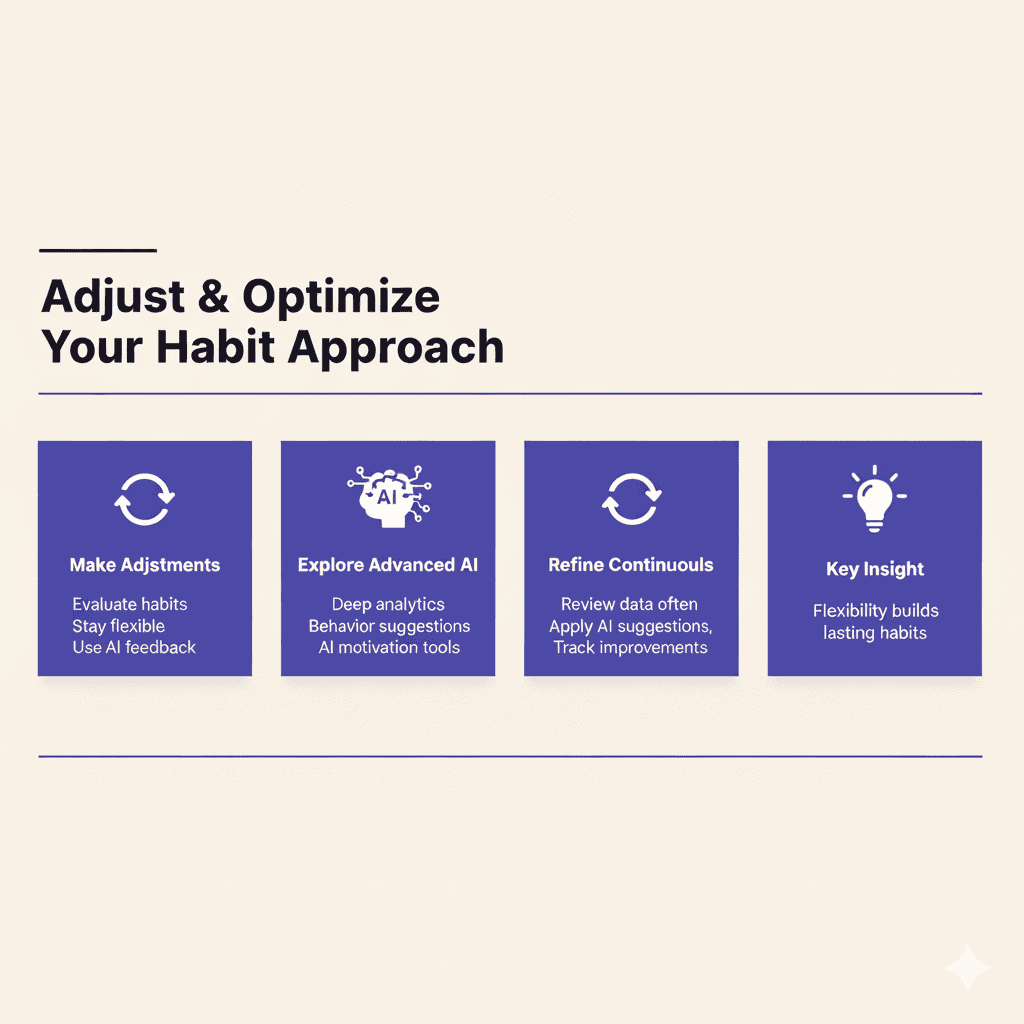
- Evaluate Existing Habits: Use AI habit analytics to measure what’s working and what isn’t.
- Embrace Flexibility: Allow for habit modifications as your needs and circumstances change.
- Use AI Habit Feedback: Let AI-generated insights guide you in refining your approach.
I remember tweaking my work routines based on AI habit reminders; suddenly, tasks weren’t burdens, they were automatic actions. This freedom to adjust made all the difference in achieving consistency.
Key Insight: Flexibility leads to more robust and enduring habit formation.
Explore Advanced AI Features for Deeper Habit Optimization
As I became more comfortable with AI tools for habits, I discovered advanced features that made BIG improvements. Delving deeper into artificial intelligence for habits allowed not just surface-level changes, but profound lifestyle shifts.
- AI Habit Data Analysis: Gain insights into time spent on tasks and refine your approach.
- Behavior Change AI: Use features that suggest new habits based on your patterns and goals.
- AI Motivation Techniques: Leverage AI-driven motivation to keep the momentum going.
| Feature | Benefit | My Experience |
|---|---|---|
| Data Analysis | Pinpoint weaknesses | Realized peak productivity hours |
| Behavior Change | Suggests improvements | Offered fresh habit strategies |
These tools felt like an invisible mentor, constantly pushing me toward smarter habits. Integrating AI lifestyle changes moved me beyond rigid routines into adaptive efficiency, transforming how habits formed.
This changed EVERYTHING for me: sophisticated AI features provided a deeper understanding.
Continuously Refine Your Approach Based on AI Feedback and Results
Refining habits is an ongoing journey, and AI plays a pivotal role in this constant evolution. I learned to treat AI habit feedback not as criticism, but as vital data to fuel better habits.
- Review Data Regularly: Continuous checking offers a wealth of data for habit evaluation.
- AI Habit Suggestions: Implement changes based on AI hints, it’s like unlocking hidden potential.
- Monitor AI Habit Success: Track ongoing improvements and address areas needing more focus.
This habit monitoring and adjustment process felt like a partnership, with AI habit systems offering support and guidance every step of the way. It’s a marathon, not a sprint, yet AI makes this marathon feel like YOU HAVE A CHEERING TEAM the whole way through.
Key Considerations For Successfully Building Better Habits with AI
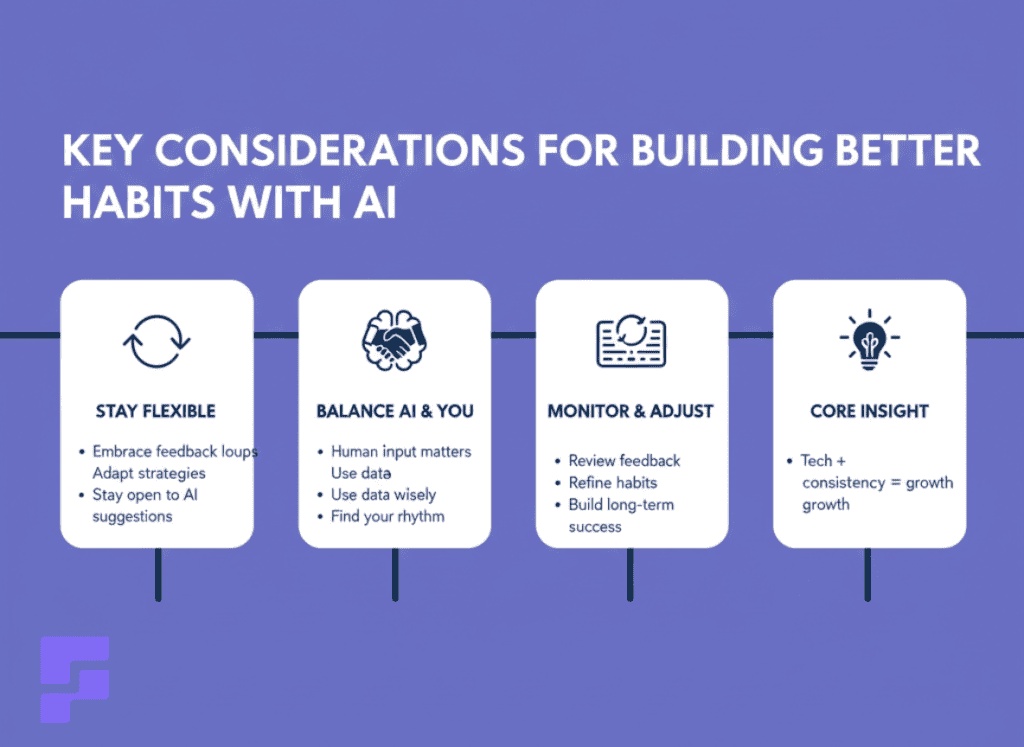
When it comes to how to build better habits with AI, it’s all about being open to change and adjusting your strategy as needed. AI tools can offer some amazing insights, but at the end of the day, your personal effort and consistency make all the difference. Think of AI as your assistant, not your savior.
Staying Flexible and Adaptive
I remember diving into habit tracking AI tools with the belief that they would do all the work for me. Oh boy, was I wrong! Flexibility was essential, and understanding that feedback loops are there to help, NOT to point out failures, was transformative.
- Feedback Loops: Embrace them as learning tools. They show you what’s working and where changes are needed.
- Adapt Your Strategy: Don’t be rigid. Algorithms may suggest adjusting your approach, and that’s a GOOD thing!
- Stay Open to AI Habit Suggestions: Be willing to adapt new technologies and insights to maximize your habit-building journey.
I constantly used AI habit analytics to reshape my strategies. The process was dynamic, what worked one month needed tweaking the next. This kind of adjustment felt like steering a ship through ever-changing waters, each move bringing me closer to my goals.
The takeaway: Consistency paired with adaptability is what solidifies smart habit development.
Balancing AI Insights with Personal Input
AI habit tools provide a treasure trove of data, yet without personal input, the dots don’t quite connect. Aligning your personal efforts with AI habit motivation techniques can create a powerful synergy.
- Human Touch: Personalize AI habit routines to inject your personality and goals into them.
- Use AI Habit Data: Let machine learning habits guide you while you remain the captain of your ship.
- Find Your Rhythm: Balance tech-driven insights with personal discipline to cultivate habit consistency.
I used AI habit apps like Habitica as a guide, but my OWN effort was at the core of change. There were days I found the insights invaluable, yet my perseverance kept me moving forward. While AI habit reminders nudged me, my own determination was the driving force.
The insight: AI habit improvements are best achieved with a balance of tech and tenacity.
Monitoring and Adjusting
I’ve learned that continuous monitoring and adjustment pave the way toward AI habit success. An AI habit evaluation isn’t a final report, it’s the start of the next steps.
- Constant Evaluation: Regularly review and assess AI habit feedback for opportunities for refinement.
- Adapt as You Progress: Keep evaluating AI habit data to adjust your approach for the best outcomes.
- Build Long-term Success: Let AI-driven insights guide your personal growth journey, fostering sustainable changes.
Over time, I have found that embracing changes and using AI habit support effectively was like molding clay, it required ongoing work and dedication, but the results were rewarding. Each adaptation added a layer of depth to my journey, helping me craft resilient, enduring habits.
By staying flexible, balancing insights with personal touch, and continually adjusting, you’re not just riding the AI wave. You’re steering it, creating a current that carries you to achievement.
In the end, AI habit optimization was less about technology and more about personal empowerment.
Taking it to the Next Level: How to Enhance Habit Building with AI
Imagine having a personal coach that understands YOU. With AI, this is no longer just a dream; it’s reality. Harnessing artificial intelligence for habits involves diving into machine learning algorithms that effortlessly adapt to your unique behavior patterns. I’ve been down the path myself, and TRUST ME, this is how to amplify your habit-building journey.
Personalized Habit Coaching with AI
Incorporating AI habit assistants felt like having a tailor-made program designed just for me. These tools aren’t just about reminders or checklists; they work to understand you, evolving as you do.
- Tailored Strategies: Machine learning habits rely on analyzing your past behaviors, offering habit strategies uniquely designed for your needs.
- AI Habit Personalization: AI focuses on what makes you tick, suggesting personalized solutions. I remember marveling at how intuitive these suggestions felt, like a friend who just gets it.
- Rapid Adaptation: As your habits evolve, AI habit automation technology adjusts effortlessly, ensuring continued growth.
I learned from an AI habit coach app that minor tweaks in my schedule led to HUGE efficiency gains without much effort. This tech wasn’t just there to help with current goals, but to offer cutting-edge insights continually.
The true magic lies in AI’s ability to continuously refine its approach, offering fresh, personalized habit insights.
Advanced AI Features for Smarter Habits
Exploring AI’s advanced features opened new avenues for habit transformation, letting me explore deeper into digital habit formation. There’s more than meets the eye!
- AI Habit Analysis: These tools dissect collected data, showing patterns and trends you might overlook. It’s like having a data whisperer, one that reveals ways to optimize time and effort.
- AI Habit Reinforcement: With AI habit success techniques, reinforcing good habits happens naturally through positive nudges and feedback loops.
- Insightful Feedback: Feedback isn’t generic; it’s detailed and data-backed. It helps in understanding what needs change, tweaking routines based on AI habit evaluation.
| AI Feature | Benefits | Personal Impact |
|---|---|---|
| Data Insights | Spot patterns | Unlocked new productive times |
| Reinforcement | Positive nudges | Strengthened habit adherence |
Venturing into the realm of AI habit analytics also taught me that sometimes the smallest data points lead to the most significant changes. AI was the partner reminding me to tweak, adjust, and grow smarter.
Allow AI to be your co-pilot, guiding you to habit greatness with precision.
Continuous Refinement and Growth with AI
Let me tell you, habit building with AI is not a one-shot deal, it’s about ongoing refinement and growth. Embrace the challenge!
- Habit Adjustments: Whenever I hit a plateau, AI-led adjustments ensured I wasn’t stuck. The constant loop of feedback kept me on my toes.
- Goal Evolution: Over time, the AI habit planner suggested evolving goals, transforming my approach from reactive to proactive.
- Comprehensive Monitoring: Thorough AI habit tracking provided a clear roadmap of progress, making distant goals feel reachable.
Reflecting on AI habit solutions provided a profound sense of achievement. The constant realignment and updates from technology for habits showed me that advancing, learning, and adjusting was part of the journey.
The biggest takeaway: Habit formation technology isn’t static; it’s an evolving path that grows with you.
By embracing AI for improving habits, you’re not just enhancing your routines, you’re stepping into a realm where habits become deeply personalized, consistently improved, and continuously evolved. Trust me, with the right AI habit systems, you’re in for a life-changing experience!
Alternatives to Using AI for Habit Building
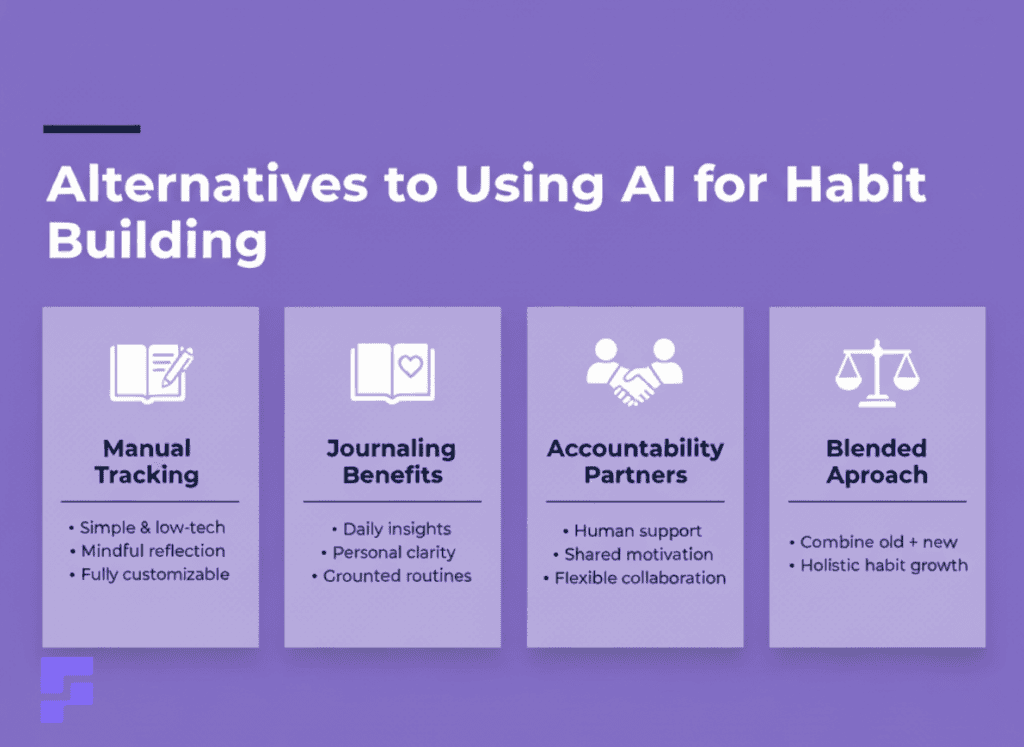
While AI can significantly boost habit building, let’s not forget the traditional methods that have stood the test of time. I often find myself reflecting on how the foundational techniques of habit development remain relevant even in a tech-centric world. These methods, such as manual habit tracking and accountability partnerships, serve as fantastic companions or alternatives to the AI-driven systems. So, let’s dive into how these can complement your habit journey alongside or instead of AI.
Manual Habit Tracking & Journaling
Before AI habit apps became popular, I relied heavily on manual habit tracking. There’s something deeply satisfying about penning thoughts down. Personally, I’d use a simple notebook, jotting down new habits and the progress each day. This method offers tangible engagement, something digital platforms can’t fully replicate.
- Simplicity: No tech skills required; just a pen and paper.
- Mindfulness: Reflect on daily achievements without digital distractions.
- Personalized Flexibility: Create a tracking system that suits YOU perfectly.
Sure, there’s no AI habit analysis here, but the manual tracking approach offers insights about YOU, keeping things grounded. It teaches discipline without feeding data into any system. Plus, it’s a great way to unplug while still focusing on self-improvement.
This was the biggest lesson I learned: simplicity sometimes trumps complexity.
Accountability Partnerships
Relying on people instead of tech has its unique charm. An accountability partner can be more motivating than an “AI habit assistant”, trust me!
Back in the day, my colleague became my accountability buddy for a work exercise routine. We would nudge each other to stay committed, offering real-time, human feedback that no AI habit planner could replace. It was as much about camaraderie as about habit building.
- Human Connection: Genuine feedback and support from someone who truly gets your journey.
- Shared Experiences: Exchange stories, struggles, and solutions.
- Flexible Interaction: Adapt the system as both partners evolve their goals.
I noticed that this partnership led to LONG-LASTING transformations. It wasn’t just habit change with AI data; it was a shared journey that made the process feel less like a solitary struggle and more like a mutual adventure.
The takeaway? Mixing traditional methods with AI habit solutions can enrich the journey, offering a balanced path to goal attainment. Each approach has its merits, and sometimes, combining the old with the new is the secret sauce to effective habit building.
Remember: AI might not always be present, but a good partner often is.
These time-tested methods emphasize that habit building isn’t only about leveraging cutting-edge tools. By incorporating traditional approaches, the process becomes holistic and robust, providing a well-rounded strategy alongside or instead of AI habit transformation.
Final Thoughts
Harnessing the power of AI can transform your approach to habit building, turning complex goals into achievable routines. By leveraging AI tools for habits, you can set precise habit goals, track your progress with habit tracking AI, and receive personalized AI habit insights to refine your strategy. Your path to success in learning how to build better habits with AI is now clearer than ever. Embrace this technology to optimize your routines and achieve lasting change.
Continue Reading: Want to learn more? Check out my guide on How to Use AI for Productivity. This post delves deeper into AI tools that can enhance both your productivity and habit-building efforts, offering a comprehensive look at AI-driven habits and technology for habits.
FAQs
What is the role of AI in habit building?
AI plays an important role in habit building by providing personalized insights and reminders tailored to your specific goals. AI tools can analyze your behavior patterns, offer nudges at optimal times, and provide data-driven feedback to help you stay on track. This technology makes habit formation more efficient and sustainable by adapting to your unique lifestyle.
How do I choose the right AI tools for building better habits?
To choose the right AI tools for habit building, start by identifying your specific habit goals and needs. Research various AI habit apps that offer features such as tracking, reminders, and analytics. Consider tools that align well with your personal preferences and lifestyle, and prioritize those that provide clear feedback and motivation techniques.
Can AI habit assistants really improve my daily routine?
Yes, AI habit assistants can significantly improve your daily routine by providing timely reminders, personalized suggestions, and motivation to adhere to your habits. These digital assistants act like a personal coach, helping you optimize your schedule and stay consistent with habit development, ultimately leading to a more productive and balanced lifestyle.
Why should I integrate AI into my habit formation process?
Integrating AI into your habit formation process is beneficial because it leverages advanced technology to provide real-time feedback and insights, helping you understand and adjust your habits effectively. AI tools can automate reminders and analyze your progress, making it easier to maintain consistency and achieve your habit goals over the long term.
What are alternatives to using AI for habit building?
Alternatives to using AI for habit building include traditional methods like manual habit tracking, journaling, and forming accountability partnerships. These approaches can complement AI tools or serve as standalone strategies, offering a more personal touch and fostering discipline through human interaction and self-reflection.