
How to Use AI for SEO Effectively in 2025
“SEO is dead.” You’ve probably heard this ominous claim countless times, yet here we are, still battling for that coveted top spot on Google. What if I told you that learning how to use AI for SEO could be your secret weapon to not just survive but thrive in this ever-evolving digital landscape? As someone who’s spent years in the trenches of search engine optimization, I’ve witnessed firsthand the transformative power of AI-driven strategies. From AI-enhanced keyword research to AI-powered content optimization, the synergy of AI and SEO is nothing short of revolutionary.
You’ll learn to select the right AI tools, conduct AI-driven keyword research, and optimize your content with AI assistance. Plus, we’ll cover AI for technical SEO improvements and link-building strategies. Ready to unlock the potential of AI in search engine optimization? Let’s get started by exploring the right tools to set you on the path to SEO success.

Table of Contents
Step-by-Step Instructions to Leverage AI for SEO
AI for SEO can make a significant difference. I’ve seen it firsthand with businesses that were struggling and suddenly skyrocketed in search rankings by embracing AI-driven strategies. Let’s break down how to make AI work for you, ensuring your site’s visibility and competitive edge.
Select the Right AI Tools
Navigating the vast world of AI tools for SEO sometimes feels like searching for a needle in a haystack. But here’s the silver lining: once you find the right tools, they can transform your SEO strategy. When I transitioned from traditional accounting to data science and AI development, I learned the hard way how crucial having the right tools is. They not just simplify the process but help achieve your SEO goals more efficiently.
Evaluating AI Tools for SEO
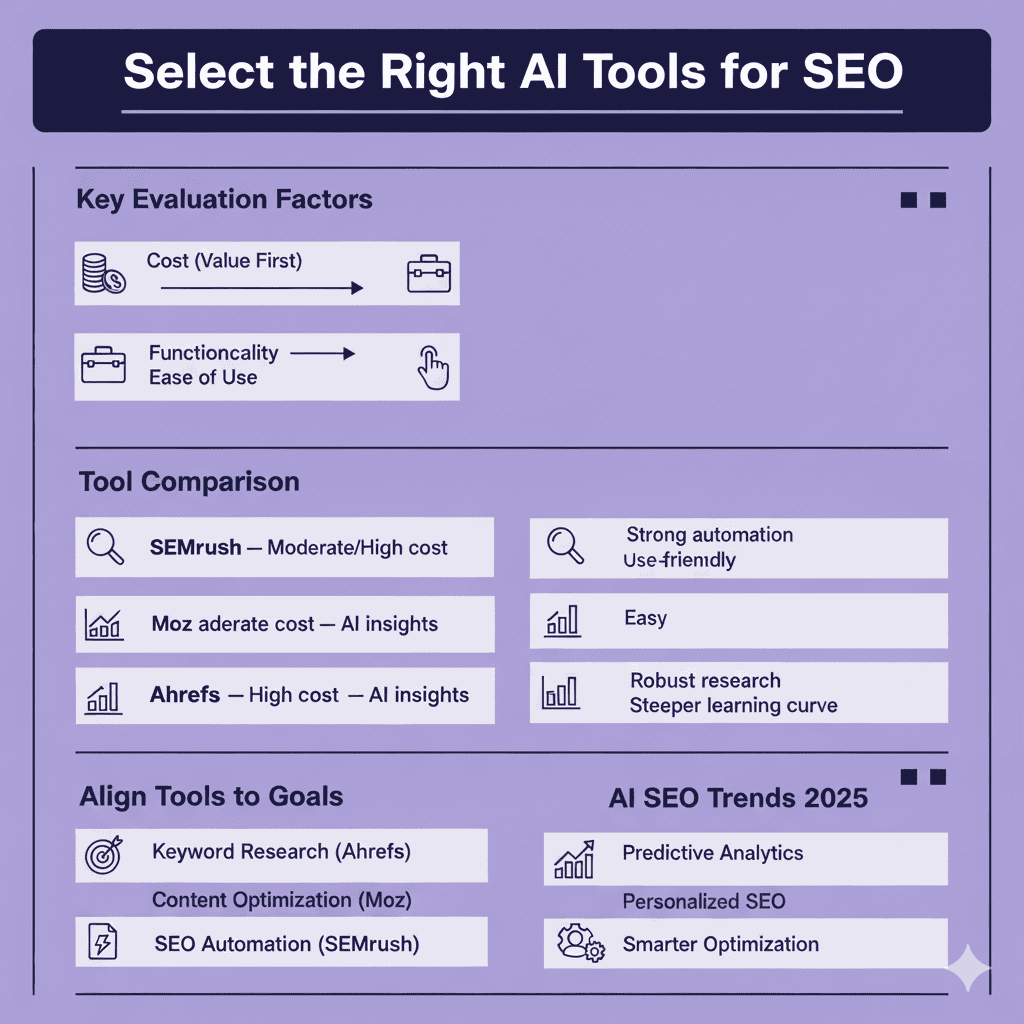
With AI for SEO booming, it’s easy to be swept away by the latest tools promising magic results. From my experience, though, it’s essential to focus on core factors like cost, functionality, and ease of use.
- Cost: Don’t just consider the price tag, but think about the VALUE the tool brings. Does it save you time? Boosts productivity?
- Functionality: Does the tool offer comprehensive AI SEO optimization? Are its features aligned with your objectives?
- Ease of Use: I once spent days learning a tool only to find it wasn’t user-friendly. TRUST ME, ease of use is key.
| Tool | Cost | Functionality | Ease of Use |
|---|---|---|---|
| SEMrush | Moderate to High | Offers detailed analysis, keyword research | User-friendly |
| Moz | Moderate | Excellent AI-driven insights for SEO enhancement | Fairly simple |
| Ahrefs | High | Robust competitor analysis and keyword research | Complex initially |
Key Insight: It’s not about the most expensive tool, but about which one aligns seamlessly with your AI goals.
Aligning Tools with Your SEO Objectives
Once overwhelmed by endless AI SEO tools, I discovered the importance of goal alignment. The right tools should directly support your specific SEO objectives , be it keyword research, content optimization, or competitor analysis.
- AI for Keyword Research: Tools like Ahrefs are BOSS for finding niche keywords that enhance SEO efforts.
- AI-Driven Content Optimization: Moz, for instance, offers insights that boost on-page and off-page SEO.
- SEO Automation with AI: SEMrush excels in automating tedious tasks, freeing up time for strategic planning.
Lesson learned: AI-powered SEO tools should evolve your SEO strategy, turning insights into actionable tasks that drive results. Pick the ones that resonate with your goals.
AI SEO Trends for Future Success
The future is BRIGHT for AI in digital marketing, especially in SEO. AI trends in SEO 2025 suggest a shift towards more personalized and predictive analytics. I remember when I first started using AI for SEO, the strides were already impressive, but now it’s on another level.
- AI SEO Innovation: Predictive analytics are becoming the norm, offering foresights into future SEO trends.
- SEO Personalization with AI: Embrace AI algorithms that tailor content to specific audience needs.
- AI and SEO Optimization: Continual trends highlight the synergy between AI and SEO, moving towards more intelligent and intuitive SEO solutions.
This was HUGE for me: Keeping an eye on trends and adapting can keep you ahead. AI SEO innovations are reshaping the landscape, and the early adopters will have a competitive edge.
It’s beyond exciting to see how AI can propel SEO strategies forward. For those keen on diving deeper into AI chatbots or integrating AI into business processes, let’s connect. I’d love to guide you through a customized strategy. Book a FREE consultation.
Conduct AI-Driven Keyword Research
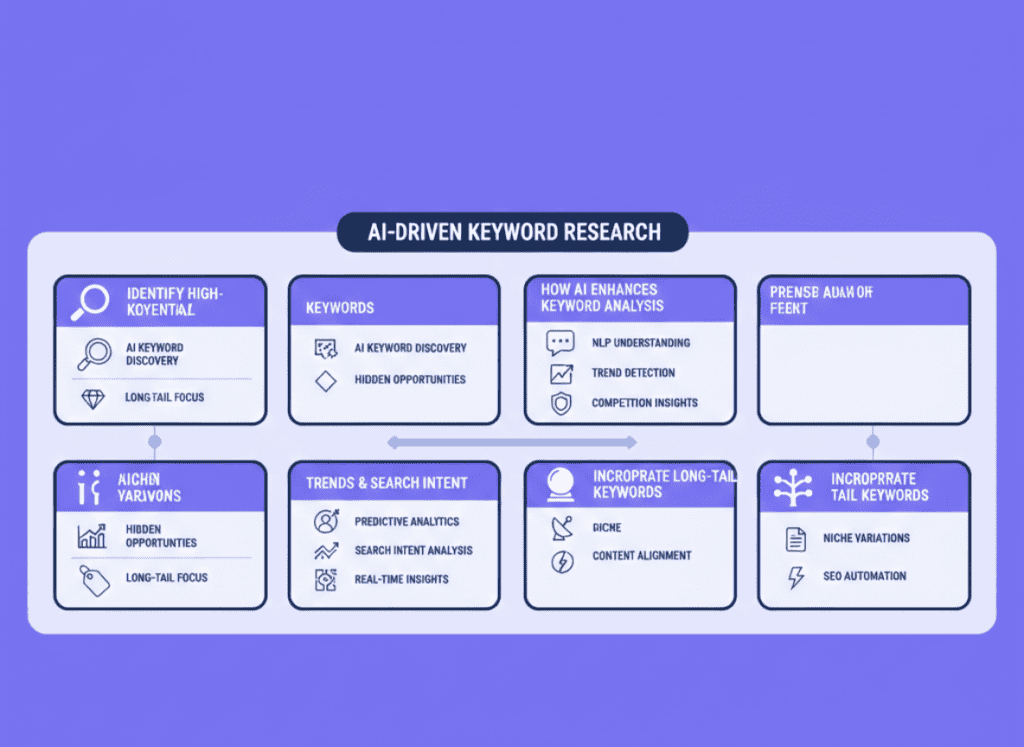
AI-driven keyword research can feel boring at first, but it can make a meaningful impact. AI allows you to pinpoint high-potential keywords with less competition, making SEO optimization not just guesswork but a strategic art form.
Using AI to Identify High-Potential Keywords
Back when I first started in digital marketing, keyword research felt like navigating a dark tunnel. Enter AI, and suddenly, there’s a light. It’s not just about finding keywords but uncovering those hidden gems with high potential.
- AI for SEO: Tools like SEMrush use AI to analyze vast datasets, highlighting keywords you might overlook.
- Long-tail keywords: AI helps in digging out long-tail keywords , those specific phrases that can bring in highly targeted traffic.
- Natural language processing: AI’s ability to understand and interpret consumer language is invaluable for SEO optimization.
| Keyword Type | Potential | Competition |
|---|---|---|
| Generic Keywords | Broad | High |
| Long-tail Keywords | Specific | Low |
Big Insight: Long-tail keywords found through AI analysis can drastically tilt the scales in your favor.
Analyzing Keyword Trends and Search Intent
Understanding keyword trends and search intent is CRITICAL to staying ahead in the SEO game. AI algorithms can spot shifts in search behavior faster than conventional methods.
I remember feeling FRUSTRATED trying to catch up with trends manually. AI tools changed that. Here’s how they help:
- Predictive Analytics: AI-driven SEO strategies predict keyword trends before they peak, giving you a head start.
- Search Intent Analysis: Tools analyze user behavior patterns, ensuring your content aligns with what people are genuinely searching.
- AI SEO Analytics: These insights help in detecting seasonal trends and understanding user demands in real-time.
- Machine Learning for SEO: Constantly learning from data, these tools refine their predictions and suggestions over time.
Lesson learned: Don’t just ride the trends; anticipate them with AI insights.
With AI in search engine optimization, you have a compass rather than just a map.
Incorporating Long-Tail Keywords Through AI
Incorporating long-tail keywords is like finding the secret ingredient to a recipe. When I began using AI-powered SEO tools, it wasn’t just about volume; it was about relevance and intent.
- AI SEO Tools: They suggest long-tail variations specific to your niche, increasing the chance of ranking higher.
- AI Content Optimization: Aligns content with these keywords, ensuring you address the right audiences.
- SEO Automation with AI: Automates the tedious process of identifying and incorporating these keywords into content.
This changed EVERYTHING for me: Using AI to incorporate long-tail keywords made my strategies more precise and successful.
By leveraging AI-driven keyword research, your SEO efforts become smarter and more effective. It’s all about making informed choices that align with both current trends and future predictions. Need help navigating the world of AI chatbots or tools? I’m here to chat. Book a consultation.
Optimize Content with AI Assistance
Customizing content to meet search demands has become simpler and more efficient with AI. It feels like getting a secret weapon in the ever-evolving battlefield of SEO. Incorporating AI not only revamps your content but also catapults it into realms previously unimagined. And let’s face it, in the digital world, keeping everything sharp is a MUST!

Employ AI to Generate Content Ideas and Optimize Existing Content
Back when I was stuck in the 9-5 world, brainstorming unique content ideas felt exhausting, and more often than not, it was like being on a hamster wheel. But with AI’s contribution, the dynamic changes drastically.
- AI Tools: Use platforms like ContentBot for crafting creative angles based on current trends.
- Idea Generation: AI analyzes audience behavior to suggest relevant, engaging topics.
- Content Refresh: Review existing content, identifying sections for enhancement or updates ensuring relevance.
| AI Tool | Benefit | Limitation |
|---|---|---|
| ContentBot | Diverse idea generation | Requires clear parameters |
| Copy.ai | Quick drafts | Output may need refinement |
| Frase.io | Topic clustering, keyword suggestions | Integration complexity |
Important lesson: Leveraging AI not only improves content depth but also refreshes old posts, keeping them relevant.
Use AI to Improve Readability, Engagement, and Keyword Placement
Optimizing readability and engagement might sound complex, but AI makes it as easy as pie. My early attempts felt like I was writing in another language, but those digitized tools quickly turned things around.
A few tricks that I’ve learned include:
- AI for SEO: Utilize tools such as Grammarly to refine readability or Hemingway Editor for clarity and simplicity.
- Engagement Metrics: AI-powered analytics offer insights into what hooks audiences, suggesting real-time adjustments.
- Keyword Magic: Emphasize AI-driven keyword placement that feels natural and coherent, optimizing both user experience and search engine algorithms.
This was SERIOUSLY EYE-OPENING: People engage more when content hits that sweet balance of information and readability.
Leverage Natural Language Processing to Enhance Content Relevance
Ah, Natural Language Processing (NLP), this was my introduction to AI’s world of possibilities. NLP doesn’t merely polish the content but customizes it to align with user and search intent confidently.
- AI Algorithms: Deepen content relevance with machine learning for SEM, presenting content suggestions specific to user behavior.
- SEO AI Synergy: Tools like Google NLP API analyze nuances, sentiments, and syntax, transforming flat text into compelling narratives.
- AI Insights: SEO AI algorithms foresee keyword usage through semantic analysis, which elevates missing elements in current copy.
Biggest takeaway: Tailor content through AI-driven sentiment analysis to meet audience expectations, pairing relevance with precision.
These strategies truly revolutionize how we interact with content creation and modification. “How to use AI for SEO” captures the essence of AI’s dynamic role in optimizing digital presence. The excitement of seeing tangible improvements is palpable, and if you’re stepping into the world of AI chatbots, I’m always eager to guide you. Let’s elevate your strategy together. Book a consultation.
Utilize AI for Technical SEO Improvements
In a constantly shifting digital environment, using AI for SEO can make a substantial difference. I’ve been knee-deep in projects where AI reshaped how technical SEO is approached. It’s all about leveraging the right tools and techniques to fine-tune your online presence.
Identify and Fix Technical SEO Issues Using AI Tools
Addressing technical SEO issues can feel like detective work. I recall my early days, manually sifting through endless data. Now, AI tools make this process efficient and precise.
- Crawl Errors: Tools like Screaming Frog use AI to scan your site for crawl errors, fixing them automatically or providing actionable insights.
- Site Mapping: AI can automate the generation and optimization of XML sitemaps, ensuring search engines index content properly.
- Duplicate Content: Using AI algorithms, tools like Siteliner detect duplicates, minimizing their negative impact on SEO.
| Tool | Functionality | Benefit |
|---|---|---|
| Screaming Frog | Crawl error detection | Accurate and time-saving |
| Siteliner | Duplicate content identification | Reduces redundancy |
Biggest takeaway: AI tools efficiently identify and resolve issues, preventing potential SEO pitfalls.
Enhance Site Speed, Mobile Optimization, and Schema Markup with AI
Site speed, mobile optimization, and schema markup are vital. Using AI enhances each of these areas, transforming your site’s performance.
When I first optimized a client’s site using AI-driven strategies, they immediately noticed an uplift in performance and user engagement. Here’s how:
- AI-Driven Speed Optimization: Tools like Google’s Lighthouse use machine learning to recommend precise code adjustments to boost speed.
- Mobile-Friendly Enhancements: AI tools can simulate user experience across devices, optimizing layouts for mobile users.
- Schema Markup Integration: Automate schema markup using AI to enhance SERP visibility with rich snippets.
This changed EVERYTHING for me: Seeing tangible improvements in site speed due to AI-driven modifications was revolutionary.
Automate Technical Audits and Performance Tracking with AI-Powered Solutions
Regular audits and performance tracking are essential, but let’s be honest, it’s a BORE until you automate with AI.
A while back, managing these tasks manually drained my time. AI-powered solutions flipped that script:
- Automated Audits: Platforms like SEMrush automate comprehensive SEO audits, providing real-time updates.
- Performance Analytics: AI offers predictive analytics, forecasting trends and adapting strategies dynamically.
- AI SEO Monitoring: Constant monitoring with AI tools ensures any drop in performance is quickly addressed.
| AI Solution | Feature | Advantage |
|---|---|---|
| SEMrush | Automated SEO audits | Time-saving and proactive |
| Predictive Analytics | Trend forecasting | Keeps strategies adaptive |
Lesson learned: Automating audits and performance tracking frees up time to focus on strategy rather than routine checks.
Embracing AI for technical SEO is about making smart, informed improvements without the usual hassle. If you’re interested in elevating your SEO game, I’d be thrilled to help you with AI chatbot integration or custom strategies. Book a consultation.
Implement AI in Link-Building Strategies
Link building is often seen as the backbone of SEO, and it can be TIME-CONSUMING. I know how it feels trying to work on all aspects while desperately seeking those high-quality links. That’s where AI comes in to not just help, but to totally transform your strategy.
Use AI to Identify Potential Backlink Opportunities
Leveraging AI for SEO means automating tasks that once took hours, if not days. I remember when identifying potential backlinks was a manual, tedious process involving spreadsheets and overwhelming data analysis. Now, AI tools streamline this process by identifying relevant sites with precision.
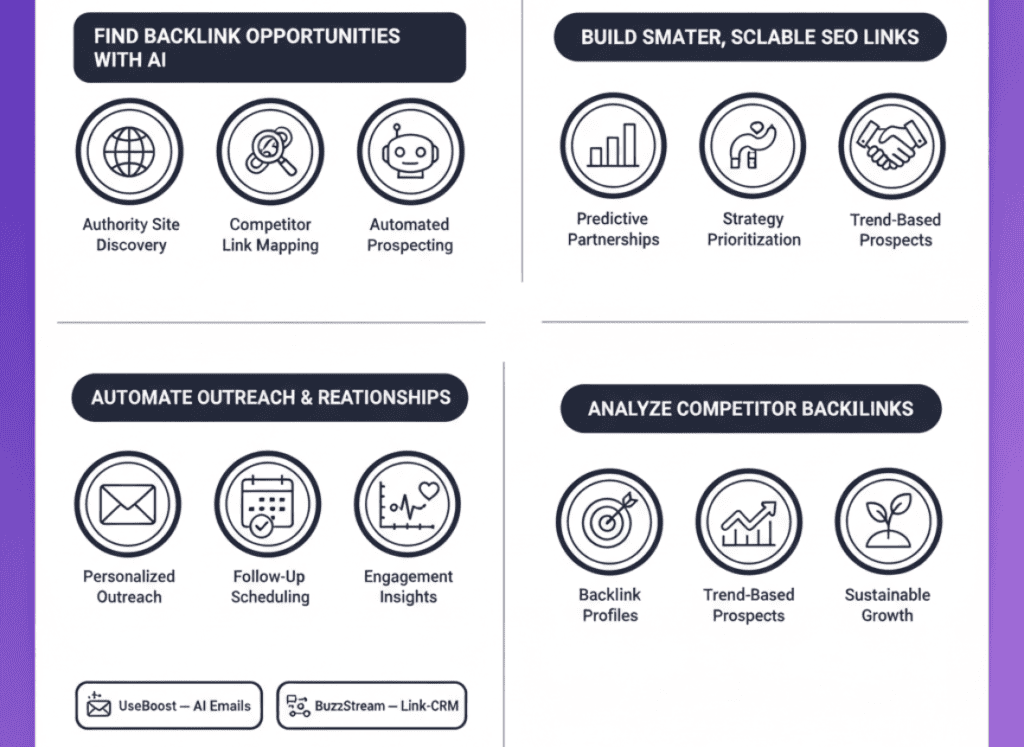
- AI-Driven SEO Strategies: Tools like Moz and SEMrush use AI to scout for domains with high authority that are likely to link back to your content.
- SEO AI Algorithms: These algorithms analyze content across the web, identifying sites already linking to similar content, a perfect chance to pitch yours.
- AI SEO Automation Tools: Platforms automatically categorize potential link partnerships based on relevance and domain authority.
The BIGGEST revelation: Let AI algorithms comb the web for opportunities, so you don’t have to feel like a link-building zombie.
Automate Outreach and Relationship-Building Processes
Building relationships is crucial, and AI takes it to the NEXT LEVEL by automating repetitive outreach processes that often drain creativity and time.
For instance:
- AI SEO Tools: Tools like UseBoost engage with potential partners through personalized AI-generated emails that appear authentic and human.
- Relationship Management: AI systems track interactions, scheduling follow-ups automatically, ensuring no lead goes cold.
- AI-Powered SEO Tools: Analyze response rates and suggest the best time and tone for follow-up communications.
| AI Tool | Functionality | Benefit |
|---|---|---|
| UseBoost | Automated, personalized emails | Increases engagement efficiency |
| BuzzStream | CRM for link-building strategies | Maintains relationship fluidity |
Lesson learned: AI-powered outreach feels like having an entire team backing your efforts.
Analyze Competitor Backlinks and Develop Strategies to Surpass Them
If there’s one thing I’ve realized, it’s that understanding your competitors’ backlink profiles can be a GOLDMINE. AI and SEO integration make this not just doable, but strategic.
I often felt overwhelmed trying to outsmart competitors manually. AI-based solutions simplify this:
- AI SEO Analytics: Tools like Ahrefs analyze competitor backlinks, revealing which sites are linking to them and not you.
- SEO Personalization with AI: Tailors your linking strategy uniquely by cross-referencing competitor links.
- AI in Digital Marketing: Reveals untapped link-building avenues by predicting potential partnerships based on existing trends.
This changed EVERYTHING for me: The confidence that comes with AI-driven insights, making informed, strategic decisions became easier.
Implementing AI in link-building is not just about working smarter but ensuring sustainable, strategic growth in your SEO presence. For more insights about bringing AI chatbots into your strategy, let’s connect and elevate together. Book a consultation.
Monitor and Analyze SEO Performance with AI
When I first dipped my toes into using AI for SEO, I REMEMBERED thinking, “This is a game-changer!” AI isn’t just about setting things up and letting them run; it’s about continuously monitoring and adjusting to make sure you’re outperforming yesterday. The beauty of it is that AI-powered SEO tools will not only track metrics but also offer insights you wouldn’t get manually.
Track SEO Metrics and KPIs Using AI Analytics Tools
Keeping an eye on your SEO performance can traditionally feel like chasing a shadow, elusive and frustrating. But with AI analytics tools, tracking is streamlined and much more insightful. Gone are the days where we’d spend hours sifting through spreadsheets and reports.
With AI:
- Tools like Google Analytics with AI integration can break down visitor data, pinpointing exactly what catches an audience’s eye.
- SEMrush offers AI-driven insights into real-time KPIs, making SEO audit reports a breeze to compile.
- I remember using Ahrefs, and the efficiency was just jaw-dropping, it dissects backlink profiles with precision, a process that used to take me hours.
| AI Tool | Features | Benefits |
|---|---|---|
| Google Analytics | Visitor behavior analysis | In-depth insights on traffic patterns |
| SEMrush | Real-time KPI tracking | Comprehensive performance overview |
| Ahrefs | Backlink analysis | Swift and accurate backlink insights |
Key takeaway: AI tools make SEO monitoring more than just tracking, it’s about extracting meaningful insights.
Employ Predictive Analytics to Forecast Performance Outcomes
Here’s where AI REALLY shines. Remember when predicting trends in SEO felt like reading tea leaves? Thankfully, those days are over. With AI predictive analytics, you can harness the magic of anticipating future performance like a PRO.
Predictive analytics allow you to:
- Forecast traffic trends based on historical data and user behavior patterns.
- Use machine learning in SEO to see what content will resonate ahead of time, a true game-changer.
- Automate the adjustment of SEO strategies based on predicted outcomes, maximizing your efforts.
This was the BIGGEST revelation: Predictive analytics turn uncertain futures into strategic plans.
Continuously Refine Strategies Based on AI-Driven Insights
Here’s a truth bomb: SEO isn’t static. It’s CONSTANTLY evolving. AI-driven insights provide the clarity needed to pivot strategies swiftly. When I first realized this, it felt like a lightbulb went off, no more relying on quarterly reviews.
Here are some steps to refine strategies:
- Leverage AI SEO tools like Moz to receive real-time alerts on performance shifts.
- Utilize AI content optimization tools to highlight what changes can boost engagement and search ranking.
- Continuously conduct AI-driven SEO audits to elevate your strategy without manual drudgery.
Lesson learned: AI-driven insights ensure you’re not just in the game, but leading it with data-informed strategies.
Harnessing AI isn’t just about doing things quicker; it’s about doing them smarter. From tracking metrics with pinpoint accuracy to predicting what’s next on the horizon, AI transforms your approach to search engine optimization.
Key Considerations For Successfully Using AI for SEO
Embracing AI for SEO isn’t just for tech enthusiasts; it can make a real difference for anyone looking to strengthen their digital presence. I’ve been in the trenches and learned that combining artificial intelligence with SEO strategies can radically transform your efforts. It boils down to staying updated, integrating tools smoothly, and striking a balance between automation and human expertise.

Stay Updated with the Latest AI and SEO Trends
Keeping up with trends is CRUCIAL in the fast-paced world of AI-driven SEO strategies. I’ve faced times when missing an update set me back weeks. Staying in the loop makes all the difference.
- Follow Industry Leaders: Blogs, podcasts, and forums are treasure troves for AI SEO insights. Engaging with these sources keeps you ahead of the curve.
- Participate in Webinars: They’re a GREAT way to dive deep into trends and learn from experts.
- Read Research Papers: They might sound daunting, but these contain predictions and data on AI SEO trends 2025, giving you a competitive edge.
| Source | Benefit |
|---|---|
| Blogs and Podcasts | Real-time updates and insights |
| Webinars | Interaction with experts |
| Research Papers | Data-driven predictions and trends |
Key takeaway: Regularly consuming up-to-date content maximizes your SEO efforts with the latest AI advancements.
Seamless Integration of AI Tools Into Existing Processes
Integrating AI tools can be intimidating, but when done right, it’s like having a supercharger for your SEO processes. Trust me, the frustration of a disjointed system is no joke.
- Audit Current Processes: Map out your current SEO workflow to identify where AI can add value.
- Choose Compatible Tools: Ensure your selected AI SEO software integrates smoothly with your existing systems.
- Pilot and Scale: Start small with a pilot project, gauge the AI tools’ impact, then scale.
Lesson Learned: Successful AI and SEO integration is about enhancing, not replacing, your processes should evolve, not just change.
Balance AI Automation with Human Oversight
There’s nothing like the human touch, even in the realm of AI automation. You might think AI can do it all, but I learned that human oversight ensures that automation achieves its potential.
- Monitor AI Output: Regular audits catch anomalies AI might miss.
- Human Creativity: While AI-powered SEO tools optimize efficiency, creativity and intuition remain human assets.
- Feedback Loops: Establish channels for continuous feedback to refine AI-driven SEO strategies.
BIGGEST realisation: Machines don’t replace humans; they complement them, combining both brings optimal results.
Incorporating AI into your SEO strategy involves a continuous learning journey. Staying updated, integrating tools effectively, and maintaining a balance between technology and human input lays the foundation for SEO success. Learning how to use AI for SEO can be a rewarding experience, especially when you see the impact unfold.
Taking it to the Next Level: How to Maximize AI for SEO
Exploring the world of AI for SEO is like opening a secret door to the future of digital marketing. The advancements in AI tools have MASSIVELY influenced SEO strategies, making it possible to achieve more with less effort. It’s no longer just about keywords and backlinks; it’s about personalization, predictive insights, and constant adaptation.
Leverage Machine Learning for Predictive Insights
Machine learning has a significant impact on SEO, I mean, who wouldn’t want to see what the future holds for their website’s performance? This is where AI truly stands out, making predictions based on immense datasets, something humanly impossible. When I first started experimenting with machine learning for SEO, I felt like I had a crystal ball. Suddenly, anticipating what search engines would favor didn’t seem like such a guessing game.
- Traffic Forecasting: AI-driven SEO strategies can predict traffic patterns, helping you adjust before the trend fades.
- Consumer Behavior Analysis: Understand how users interact with your site, and adapt content accordingly.
- Content Performance Prediction: With machine learning, you can predict which topics will perform best, adapting your content strategy in real-time.
Biggest insight: Predictive analytics convert unpredictability into a strategic advantage, sparking smarter decisions.
Personalize User Experiences with AI-Driven Content Recommendations
If there’s one lesson from AI in SEO, it’s that personalization is key. Personalized content experiences can enhance engagement rates exponentially. I’ve seen firsthand how tailored content speaks directly to users, making them feel understood and valued, and it was a game-changer for businesses I’ve worked with.
- Recommendation Engines: AI SEO tools analyze user data to suggest personalized content, like a personal shopper for your website.
- Dynamic Content Adjustment: Modify content based on user preferences, ensuring relevance at every click.
- SEO Automation with AI: Automate content suggestions, keeping users engaged without constant manual input.
| Feature | Benefit | Example |
|---|---|---|
| Content recommendation engine | Higher user engagement | Tailoring articles to reader interest |
| Dynamic content adjustment | Increased user satisfaction | Adjusting blog visibility based on interaction |
Lesson learned: Personalization through AI stands out as a competitive edge in attracting and retaining users.
Experiment with AI A/B Testing to Refine SEO Strategies
Experimentation is the heart of refining SEO strategies, and A/B testing with AI makes this process FAR MORE efficient. Back in the old days, it felt like a gamble, but with AI, these tests have become incredibly precise. I remember tweaking ad copy endlessly until AI made significant differences clear.
- Targeted A/B Testing: AI tools allow you to segment audiences and test variations in real-time.
- Comprehensive Performance Analysis: AI-powered SEO tools analyze data quickly, providing insightful feedback on what works and what doesn’t.
- Automated Strategy Adjustments: Once tests conclude, AI suggests evidence-backed strategies, saving time and effort.
- SEO AI Algorithms: Constant iteration keeps strategies fresh and adaptable to changing trends.
- AI for On-Page and Off-Page SEO: AI facilitates optimization by analyzing each page’s impact on overall performance.
This was an EYE-OPENER: AI-aided testing illuminated strategies to transform efforts into impactful results.
Maximizing AI for SEO isn’t just about tools; it’s about embracing a future where AI does the impossible and elevates your digital strategy to new heights. Transitioning is a journey, but it’s one that brings significant rewards.
Alternatives to Using AI for SEO
Exploring alternatives to using AI for SEO isn’t about pitting technology against traditional methods. Instead, it’s about finding that right blend of approaches that suit your unique business goals. I’ve seen firsthand how traditional methods can still play a significant role in SEO when paired with the right expertise and creativity.
Traditional SEO Methods: Manual Keyword Research and Content Optimization
Embracing traditional SEO strategies can feel like going back to basics, pretty nostalgic for those who’ve been in the game for a while. I remember my early days of manually grinding through pages of keywords and content, searching for that sweet spot that would rank a piece on Google’s search results.
- Keyword Research: Spending dedicated time on tools like Google Keyword Planner or Ubersuggest for manual search data analysis. Understanding the target audience’s search habits can provide that edge.
- Content Revision: Regularly updating content based on new insights from manual audits and competitor analysis.
- Page Optimization: Manually tweaking meta tags, descriptions, and on-page content to reflect user intent without over-relying on AI-driven algorithms.
| Technique | Pros | Cons |
|---|---|---|
| Manual Keyword Research | In-depth understanding of audience | Time-intensive |
| Content Optimization | High-quality, tailored content | Could require constant updates |
Key takeaway: While AI tools provide speed, manual methods offer depth and personalized insight into audience behavior.
Leveraging Human Expertise and Creativity in Crafting Unique Content
Sometimes, the human touch is IRREPLACEABLE. Creativity and expertise can craft content that not only meets SEO standards but resonates with the audience on a deeper level. I’ve had projects where unique storytelling did more for engagement than any AI-driven keyword stuffing ever could.
- Storytelling: Craft narratives that connect with readers, tapping into emotions or shared experiences.
- Content Variety: Produce diverse content types like videos, podcasts, and infographics that an AI may not fully grasp or generate effectively.
- Nuanced Grammar: Tailor language and style to the brand’s voice, using cultural references or humor that AI might find challenging to replicate.
Lesson learned: While AI assists with analytics and data, true creativity and connection stem from human insight.
Utilizing Non-AI-Based SEO Tools for Link-Building and Site Audits
While AI can automate and streamline SEO processes, sometimes the good ol’ non-AI tools can handle specific tasks exceptionally well. I have often used these tools when I wanted a more focused approach without the noise of AI-driven suggestions.
- Link-Building Tools: Tools like Majestic or MozBar offer manual metrics and insights into backlink opportunities.
- Site Audits: Utilizing platforms like Screaming Frog for manual, intricate site crawl insights that AI might overlook.
- Performance Tracking: Employing analytics tools with manual configurations to ensure data aligns directly with your specific objectives.
| Tool | Purpose | Specialty |
|---|---|---|
| Majestic | Link Building | Detailed link intelligence |
| Screaming Frog | Site Audits | Comprehensive crawling |
Biggest realization: Non-AI tools allow for a tailored approach, fine-tuning the online presence without tech getting overly complicated.
Embracing traditional methods and human creativity in SEO doesn’t mean discarding modern practices; instead, it’s about integrating them to form an effective, comprehensive strategy that suits individual needs. To explore more about how AI chatbots or integration can coexist with these methods, let’s connect. Book a consultation.
Final Thoughts
Harnessing the power of artificial intelligence in SEO can transform your digital strategy, positioning you ahead of competitors. By mastering how to use AI for SEO, you unlock the potential for enhanced keyword research, content optimization, and technical improvements, all while automating tedious tasks. Now’s the time to integrate AI SEO tools and start experimenting with AI-driven SEO strategies to elevate your online presence and achieve sustainable growth. Dive into the world of AI for SEO and watch your rankings soar.
FAQs
What is AI for SEO and how does it work?
AI for SEO involves using artificial intelligence technologies to enhance search engine optimization strategies. It works by employing AI tools and algorithms to analyze data, predict trends, optimize content, and automate various SEO tasks. This allows marketers to target the right keywords, improve website performance, and gain insights into user behavior, ultimately improving search rankings.
How can I choose the best AI tools for SEO?
Choosing the best AI tools for SEO requires assessing your specific needs and goals. Look for tools that offer comprehensive features like keyword research, content optimization, and technical SEO improvements. Consider factors such as cost, user-friendliness, and the ability to integrate with other tools. Notable options include SEMrush for analysis, Moz for community support, and Ahrefs for competitor insights.
Why should I use AI-driven SEO strategies?
AI-driven SEO strategies provide significant benefits, including improved accuracy in keyword targeting and content optimization. They can quickly analyze large datasets to identify trends and opportunities that might be missed with manual methods. This enables more effective content strategies, faster site improvements, and a better understanding of user intent, leading to higher search rankings and increased traffic.
How does AI improve keyword research for SEO?
AI enhances keyword research by analyzing vast amounts of search data to uncover high-potential keywords with low competition. AI tools can also predict trends and understand user intent with natural language processing, allowing you to target long-tail keywords more effectively. This leads to more precise targeting and better alignment with current search trends.
Is it worth investing in AI-powered SEO tools in 2025?
Yes, investing in AI-powered SEO tools in 2025 is worth considering due to the increasing complexity of search engine algorithms and the need for real-time data analysis. These tools can automate tedious tasks, provide actionable insights, and help you stay competitive in a rapidly evolving digital landscape. The efficiency and depth of analysis they offer can lead to better search performance and ROI.