
Surfer SEO vs SEMrush 2025: Which Tool Boosts Your SEO Strategy?
Choosing between Surfer SEO and SEMrush can feel like picking sides in a digital marketing duel. Both promise to elevate your SEO game, but which is truly the heavyweight champ in 2025? With algorithms constantly evolving, the tools you choose today can make or break your strategy tomorrow.
As someone who’s integrated both into my own projects, I know firsthand the stakes involved. Surfer SEO’s precision in content optimization has saved me countless hours tweaking content for the perfect keyword density. Meanwhile, SEMrush’s comprehensive suite has been a powerhouse for keyword research and backlink analysis. Each tool has its own strengths, but they serve different purposes in the SEO landscape.
In this SEO tool comparison, we’ll dive deep into the core features, pricing models, and unique capabilities of each. You’ll discover why Surfer SEO might be your go-to for content-focused strategies, while SEMrush could be your best bet for a holistic SEO software approach. By the end, you’ll have a clear verdict on which tool aligns with your digital marketing goals. So, let’s break it down, Surfer SEO vs SEMrush, which one will be your SEO optimization champion?

Table of Contents
What is Surfer SEO?
Surfer SEO is an innovative tool designed to enhance your website’s visibility by focusing on on-page SEO. Unlike other SEO tools, it zeroes in on the importance of optimizing individual pages to improve search engine rankings. It shines in providing content audit and optimization features that help tailor your content for better performance.
Now, why does Surfer SEO stand out? Its user-friendly interface and detailed content guidelines make it accessible even for SEO newbies. The platform guides you through the process of optimizing your content with precision. This makes the SEO optimization tools within Surfer SEO particularly effective for those looking to fine-tune their content.

However, let’s look at its pros and cons.
Pros:
- Ease of Use: Its intuitive setup simplifies complex SEO tasks.
- Detailed Content Guidelines: Provides clear instructions on optimizing for various keywords and page elements.
Cons:
- Limited Off-Page SEO Features: It lacks comprehensive tools for managing backlinks and conducting backlink analysis.
In my own experience using Surfer SEO, I found it particularly effective for content optimization and SERP analysis. One project required extensive tweaking of web pages, and Surfer SEO pinpointed exact improvements needed in content length, keyword density, and even structural changes.
But the question remains, is Surfer SEO worth it? If your strategy revolves around content-focused SEO, it’s hard to go wrong. It offers insights and guides tailored specifically to enhancing content quality, thus aligning your page better with search engine requirements.
Pro tip: Use Surfer SEO in conjunction with a tool like SEMrush to cover gaps in off-page SEO. This combination ensures a comprehensive optimization approach.
In a surfer seo vs semrush comparison, Surfer stands out for those targeting content excellence. It’s ideal for bloggers, content creators, and digital agencies that emphasize SEO strategies centered around page content.
What is SEMrush?
SEMrush is a powerhouse in the realm of SEO and digital marketing tools. Known for its exceptional ability to transform how businesses approach online visibility, SEMrush provides a comprehensive suite of tools for SEO, content marketing, social media, and more. Its ability to integrate various aspects of digital marketing is why SEMrush stands out.
Imagine having access to an extensive database for keyword research, that’s SEMrush. With its impressive data range, it helps businesses not only find lucrative keywords but also understand competitor strategies. This capability is pivotal in crafting effective SEO strategies.
When evaluating SEMrush, it’s important to consider both pros and cons. On the upside, SEMrush offers a wide range of features including robust competitor analysis and detailed SEO audits. These features make it an invaluable resource for professionals aiming to gain a competitive edge.
However, the platform can be overwhelming for beginners. Its vast array of tools may require a learning curve. Yet, once familiar, users often find the benefits outweigh this initial challenge.

In my experience, SEMrush excels in executing comprehensive SEO and PPC campaigns. For one of my clients, we leveraged its capabilities to boost their online presence dramatically. The detailed reports and strategic insights provided by SEMrush saved us countless hours and fine-tuned our approach effectively.
So, is SEMrush worth it? Absolutely, if you’re looking for an all-in-one digital marketing solution. Whether you’re a small business or a large enterprise, SEMrush offers tools that cater to your needs. In a surfer seo vs semrush comparison, SEMrush shines for its extensive features beyond content optimization, suiting those needing comprehensive SEO and digital marketing strategies.
Pro tip: Start by focusing on one tool within SEMrush to avoid feeling overwhelmed. Gradually explore more features as you become comfortable.
Overall, SEMrush is a solid investment for anyone serious about optimizing their digital marketing workflow.
Feature Comparison: Surfer SEO vs SEMrush
When deciding between Surfer SEO and SEMrush, consider your specific SEO needs. Both tools serve different purposes within the vast realm of SEO software, yet together they can create a holistic strategy. Let’s dive into their features to understand which might be better suited for you.
Surfer SEO focuses heavily on on-page SEO. Its content optimization tools are great for beginners and experts alike. By providing precise guidelines on keyword usage, content structure, and length, it helps improve your page’s ranking potential. However, if you’re looking for a tool with robust backlink analysis or broader off-page capabilities, Surfer SEO might not fulfill your needs fully.
On the other hand, SEMrush is a comprehensive digital marketing tool designed for SEO professionals and agencies who need a variety of features. It excels in competitor analysis, providing insights into competitors’ keywords, ads, and backlink strategies. It’s a powerhouse for extensive keyword research and offers an in-depth SEO dashboard with myriad reporting options. It supports both on-page and off-page SEO, but its wide range of features can feel intimidating for newcomers.
In a straightforward surfer seo vs semrush comparison, here’s what you typically get:
Surfer SEO:
- Best for content creators focusing on content optimization.
- Simple interface with clear, action-oriented insights.
- Limited in areas like backlink analysis.
SEMrush:
- Ideal for larger campaigns needing in-depth data across SEO, PPC, and marketing strategies.
- Rich in features for comprehensive site audits and SEO workflow management.
- Steeper learning curve due to its wide range of features.
Pro tip: If you’re a content creator or small business, start with Surfer SEO for its ease of use. SEMrush can be added later as your needs expand into more detailed market and competitor analysis.
Ultimately, your choice should align with your current needs and scale with future growth plans. With Surfer SEO’s simplicity in content optimization and SEMrush’s robust market research tools, both guard unique positions in the arsenal of SEO optimization tools.
Keyword Research
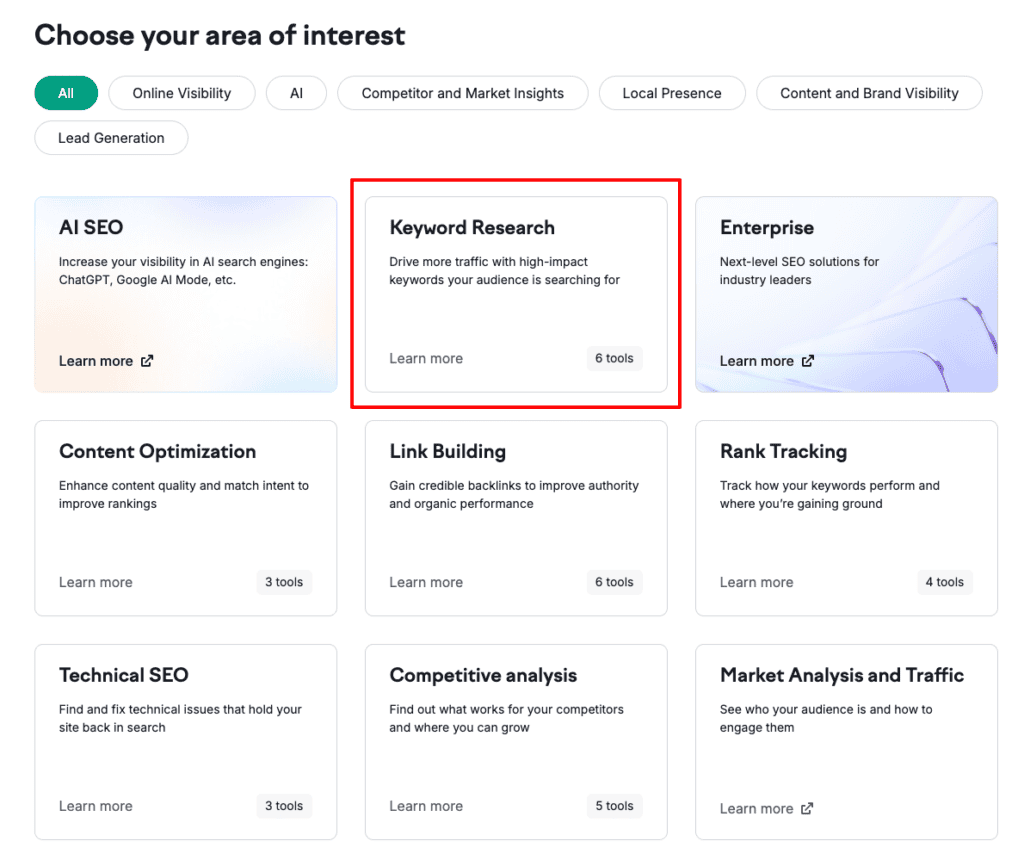
When it comes to keyword research, understanding how each SEO tool tackles this crucial task can shape your strategy significantly. Let’s dive into how Surfer SEO vs SEMrush approach keyword research.
First, Surfer SEO. It delivers keyword suggestions based on SERP analysis. The tool analyzes the top-ranking pages for your target keyword, then suggests relevant terms you should use to reach similar heights. This focus on real-time data from search results ensures you’re targeting phrases that truly matter in your niche.
Now, how does SEMrush handle keyword research? It offers an extensive database equipped with advanced filtering options. Not only can you find new keywords, but SEMrush also allows you to filter these by search volume, keyword difficulty, and more. This makes it superb for tailoring your strategy to both global trends and specific needs.
One advantage of SEMrush is its user-friendly interface, which lets you track keyword performance over time. This means you can adjust your strategies based on detailed insights, helping you stay competitive.
Key insight: Understanding current market trends through SEMrush’s keyword database can provide an edge in SEO strategy development.
But if we have to choose a winner in the keyword research battle, SEMrush takes the crown. Its comprehensive database and advanced filtering capabilities make it the go-to choice for in-depth and flexible keyword analysis.
Pro tip: Combine Surfer SEO’s SERP-based suggestions with SEMrush’s extensive data for a robust SEO workflow. This hybrid approach offers both specificity and breadth.
Ultimately, the choice between Surfer SEO and SEMrush depends on your specific needs, but for those keen on deep-dive market research and maximum flexibility, I recommend SEMrush as the superior tool for keyword research.
Content Optimization
In the realm of content optimization, there’s an ongoing debate: Surfer SEO vs SEMrush. Both tools are renowned in the SEO landscape, yet they have distinct approaches to content enhancement.
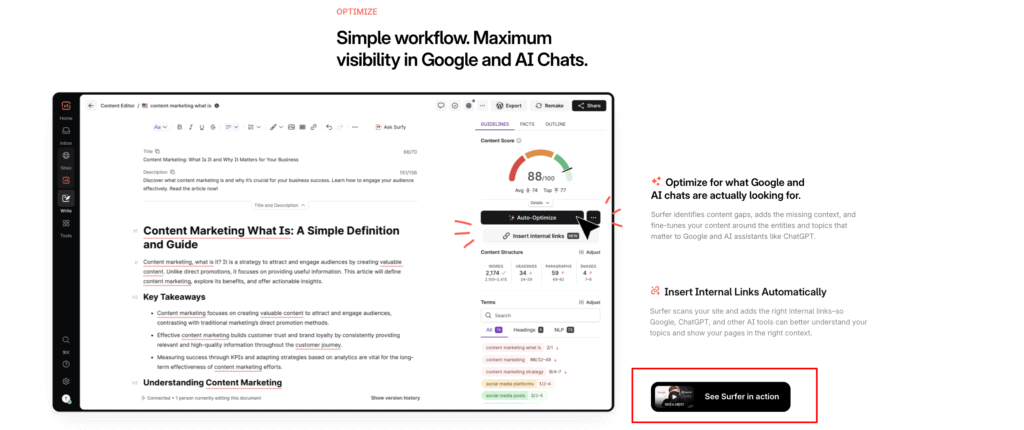
Surfer SEO excels by offering real-time content optimization. It provides precise, actionable guidelines that cater to both beginner and expert users. Imagine having a coach by your side, suggesting ways to adjust your content , that’s Surfer SEO. It goes a step further by analyzing the top-ranking pages for your target keywords and then crafting a comprehensive optimization plan. These insights can significantly boost your on-page SEO, helping refine content structure and keyword density.
On the other hand, SEMrush provides a robust SEO writing assistant. This tool aids in boosting content quality by suggesting improvements tied to readability, keyword usage, and even tone. It’s like having an intelligent spell-checker for SEO, offering suggestions as you write to ensure your content remains aligned with search engine requirements. While it doesn’t provide real-time tips like Surfer, its comprehensive approach to content improvement is invaluable.
Pro tip: Use Surfer SEO’s real-time optimization with SEMrush’s writing assistant for a holistic content strategy.
When comparing the two, Surfer SEO emerges as the winner in this feature. Its ability to deliver real-time optimization makes it an excellent choice for those focused on precision and speed. Whether you’re a digital marketing agency, a freelance content creator, or a business aiming for impeccable on-page SEO, Surfer SEO provides the edge needed to stay ahead in content optimization.
As you plan your SEO strategy, consider utilizing both tools to cover all bases. Start with Surfer SEO to fine-tune your content in real-time, then refine it further using SEMrush’s writing assistant. This dual approach guarantees comprehensive content enhancement.
Site Audit
When it comes to site audits, having the right tools can make a HUGE difference in optimizing your website’s performance. Let’s explore how Surfer SEO and SEMrush tackle this essential task.
Surfer SEO offers a streamlined approach to site audits, focusing on the fundamentals. It provides basic capabilities such as checking for metadata issues, assessing content quality, and evaluating some technical aspects. Its strength lies in delivering user-friendly insights that help even beginners take actionable steps to improve on-page SEO factors.
In contrast, SEMrush offers a FAR more comprehensive approach. It dives deep into various technical factors such as crawling your site for errors, assessing site architecture, and uncovering issues like broken links or site speed problems. SEMrush also generates detailed reports that uncover hidden opportunities for optimizing your site’s performance. These reports go beyond the basics to cover nearly everything impacting SEO.
Pro tip: Use SEMrush’s reports to prioritize SEO tasks. It highlights issues by severity, helping you focus your efforts effectively.
IN A NUTSHELL, when comparing surfer seo vs semrush for site audits, SEMrush takes the crown. It offers an all-encompassing suite of tools that cater to those who need in-depth analysis and extensive troubleshooting capabilities.
My recommendation: If your goal is thoroughness and detail, SEMrush is your go-to. But if you need simplicity with straightforward insights that focus on content, Surfer SEO might suit your needs better.
Competitor Analysis
When it comes to competitor analysis, the approaches of Surfer SEO and SEMrush differ significantly. This can make all the difference in crafting an effective SEO strategy.
Surfer SEO’s competitor analysis primarily focuses on SERP analysis. It excels at helping you understand how your webpage fares against the top-ranking pages for a specific keyword. With Surfer SEO, the spotlight is on optimizing on-page SEO elements based on this analysis. However, its scope is somewhat limited because it centers only on what’s visible on the SERP. While this is valuable, especially for content creators looking to refine their page’s elements, it doesn’t dive deep into other metrics.
In contrast, SEMrush provides a more in-depth competitor analysis across a wide array of metrics. Its toolset goes beyond the SERP, offering insights into competitors’ strategies in areas like backlink profiles, paid ads, and even social media footprints. For example, while working on a project for a small business, we used SEMrush’s analysis to identify competitors’ backlink sources and traffic patterns, insights that significantly strengthened our campaign.
Pro tip: Use SEMrush’s detailed reports to map out your competitors’ entire digital marketing strategy.
So, when choosing between the two, if your primary focus is SERP analysis, Surfer SEO stands strong. However, if you require a comprehensive look at what your competition is doing across various channels, SEMrush is the clear winner for this feature. In the surfer seo vs semrush battle, SEMrush takes the prize for those needing a holistic competitor analysis.
Ultimately, your choice should align with your specific SEO goals. Consider what aspects of competitor data are most crucial for your strategy and choose your tool accordingly.
Backlink Analysis
Backlink analysis is crucial in SEO, helping you understand your site’s authority and how it compares to competitors. In comparing Surfer SEO vs SEMrush, we notice distinct differences in their backlink handling.
Surfer SEO offers simple backlink metrics as part of its package. It focuses more on content optimization than on detailed backlink analysis. You’ll find basic data on backlinks but not the in-depth insights you might need for comprehensive optimization. Surfer SEO’s strength lies in guiding you to improve content relevance, not diving deep into backlink intricacies.
On the other hand, SEMrush excels in detailed backlink analysis. The platform provides a rich array of data, including historical backlink metrics. These insights can reveal patterns and trends over time, offering a deeper understanding of your SEO landscape. SEMrush allows users to track changes and the impact of backlinks, crucial for refining strategies and enhancing search engine visibility.
When it comes to the winner for this feature, SEMrush takes the crown. While Surfer SEO’s approach may suffice for basic tasks, SEMrush’s robust tools and historical data make it indispensable for in-depth analysis. These features are especially beneficial for those who need comprehensive insights.
Pro tip: If you primarily focus on content, use Surfer SEO; for detailed link analysis, SEMrush is essential.
In the ongoing debate, Surfer SEO vs SEMrush, for backlink analysis, SEMrush clearly outshines, making it an invaluable tool for those seeking detailed insights.
Pricing Comparison
When deciding between Surfer SEO vs SEMrush, pricing is a crucial factor. Let’s dive into what each offers for your budget and investment return.
Surfer SEO Pricing
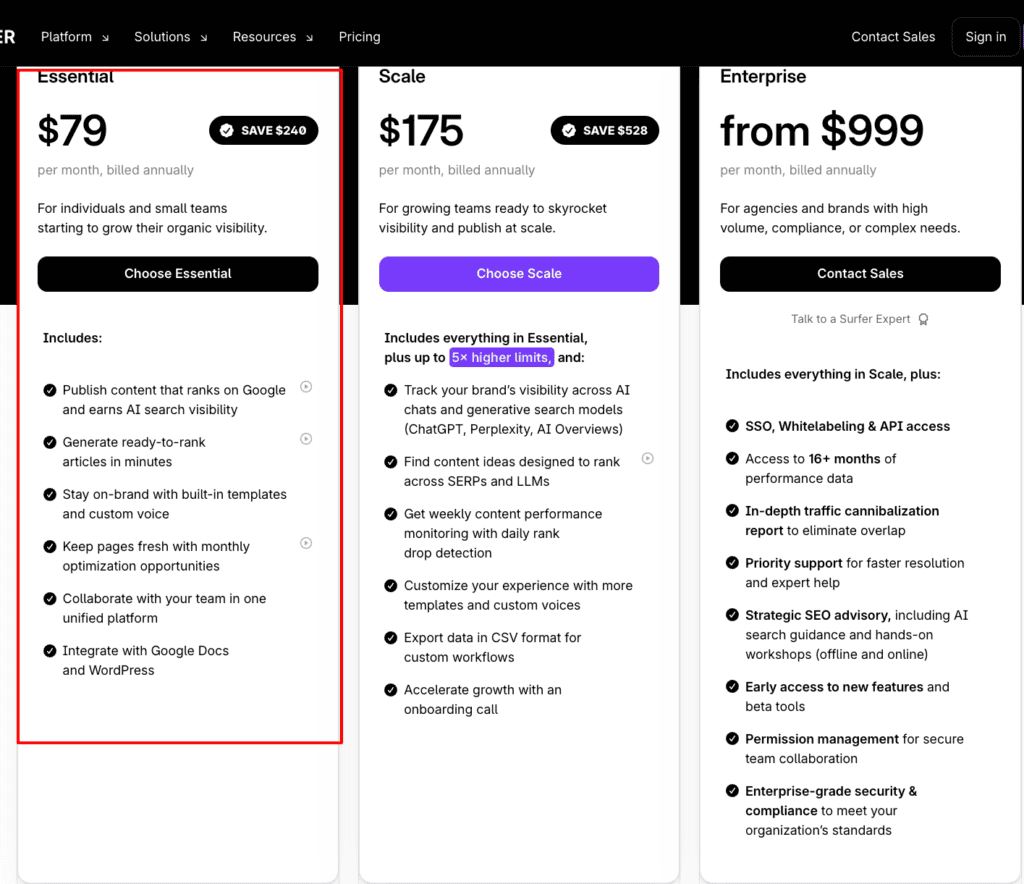
Surfer SEO does not offer a free tier, but they provide a 7-day trial. This allows you to explore their features without an upfront commitment. Paid plans begin at $79/month.
For those aiming at content optimization, Surfer SEO offers robust value. Its focus on on-page SEO makes it excellent for improving content visibility. In my projects, I’ve found that the clear guidelines and specific recommendations it provides save time and improve results. If content quality is your priority, Surfer SEO’s pricing reflects its dedicated features.
Pro tip: Evaluate the trial to see how effectively it fits your SEO strategy before investing.
SEMrush Pricing
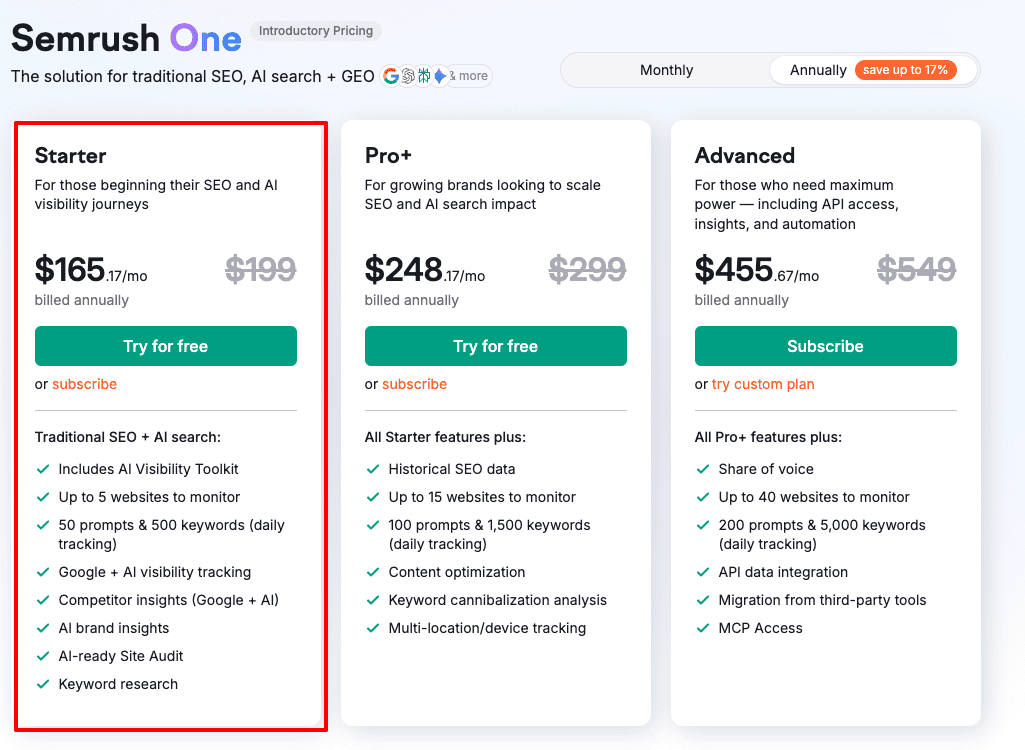
SEMrush offers limited free access to basic features, which is a good starting point for beginners. However, to leverage its full capabilities, paid plans are essential, starting at $165.17/month.
While SEMrush comes with a higher price tag, it compensates with comprehensive tools. It includes everything from keyword research to backlink analysis and even website traffic analysis. For businesses focusing on a complete SEO approach, SEMrush justifies its cost through its all-encompassing platform.
For instance, with SEMrush, you’re not just enhancing content but conducting thorough competitor analysis and gaining valuable SEO insights. The depth of tools makes it worth the investment for serious marketers.
Common mistake: Ignoring the range of features can lead to underutilizing SEMrush’s potential.
My recommendation: If your focus is purely on content optimization, Surfer SEO offers cost-effective, precise solutions. Conversely, for a broad spectrum approach involving on-page and off-page SEO, SEMrush’s extensive toolset provides a justified return on higher spending. Assess your specific needs and test options to make an informed decision.
Who Should Use Surfer SEO?
Surfer SEO shines as a critical tool for those whose main focus is content quality and on-page SEO. But who exactly benefits the most? Let’s break it down.
Ideal User Profile: Surfer SEO is a great fit for content creators, bloggers, and small businesses. If your primary aim is to enhance content rather than managing complex backlinks or conducting intensive competitor analysis, Surfer SEO’s specific features are perfect.
In projects I’ve worked on, Surfer SEO provided a significant advantage by offering precise content optimization insights. For a blogger tackling their next big post, or a small marketing team refining a web page, the value is in the on-page SEO recommendations.
This tool excels when you need detailed, actionable feedback to elevate content quality. From providing keyword density suggestions to recommending structural changes, Surfer SEO can transform how your content performs in search results.
When you compare Surfer SEO vs SEMrush, consider Surfer when your content strategy requires an elevated focus on fine-tuning on-page elements.
So, when should you choose Surfer SEO? When content quality is your utmost priority. If your site’s success hinges on engaging, optimized content that meets search engine criteria precisely, Surfer SEO is your go-to.
Pro tip: Combine Surfer SEO with a broader tool for off-page tactics, like SEMrush, for a comprehensive strategy.
For those aiming to elevate their content game while simplifying the optimization process, Surfer can be transformative. Ready to bring your content strategy to the next level? Start here.
Who Should Use SEMrush?
SEMrush is a powerhouse for those deep into the world of digital marketing. It shines for digital marketing professionals, agencies, and large enterprises that require a comprehensive suite of SEO tools. Unlike the narrower focus of Surfer SEO, SEMrush covers a wide array of needs from SEO to PPC.
In my projects, SEMrush has been invaluable for SEO analysis. Whether you’re optimizing on-page SEO, performing a site audit, or analyzing competitors, SEMrush’s features offer incredible depth. It’s like having a whole marketing team in a single interface.
For agencies serving multiple clients, SEMrush’s ability to manage diverse campaigns simultaneously is crucial. The competitor analysis and backlink analysis tools help marketing teams keep an edge in an ever-changing landscape.
Key insight: SEMrush is designed not just for SEO, but for holistic digital strategies. That’s why large enterprises benefit from its robust offerings.
When should you choose SEMrush? When you need a more expansive SEO strategy. It’s ideal when you demand tools that cover all bases, keyword research, content optimization, and more. Its AI SEO tools and extensive SEO data insights ensure you stay ahead of the game.
In a surfer seo vs semrush comparison, SEMrush stands out when the priority is a wider range of functionalities beyond just content. It’s best for users who need a full suite that extends to SEO insights, planning, and reporting.
Pro tip: SEMrush excels when your marketing strategies go beyond basic SEO and tap into PPC and market research tools.
To sum up, SEMrush is not for those just starting with SEO, but it’s a treasure trove for professionals ready to dive deep. Choose SEMrush when a diverse toolbox is needed to navigate the competitive digital landscape.
Final Verdict: Which One Should You Choose?
Choosing between Surfer SEO and SEMrush boils down to your primary focus and business needs. These two SEO giants serve different purposes within the vast realm of SEO software. But don’t fret, I’ll guide you through making the best choice for your unique situation.
Let’s start with what Surfer SEO offers. It’s like having a specialized content optimization coach by your side. If your priority is content excellence, optimizing on-page elements to enhance SEO performance, Surfer SEO is your go-to. Its ability to refine your content based on real-time SERP analysis means you’re aligning with the latest search trends. Perfect for content creators, bloggers, and small marketing teams.
Now, let’s shift gears to SEMrush. If you’re after a comprehensive digital marketing arsenal, SEMrush is unparalleled. This isn’t just an SEO tool; it’s a full suite of marketing solutions. Whether you’re managing SEO, PPC campaigns, or conducting exhaustive market research, SEMrush has you covered. It’s best suited for digital marketing professionals and agencies needing a range of features from keyword analysis to competitor insight.
My take: After working with numerous tools, I personally lean towards SEMrush. The depth of its functionality across various areas is unmatched for in-depth digital strategies. While it does have a steeper learning curve, the breadth of insight it offers justifies the journey.
Comparatively, if you’re deciding between surfer seo vs semrush, here’s the breakdown:
- Surfer SEO: Aimed at those laser-focused on content optimization.
- SEMrush: Caters to broad digital marketing needs.
Bottom line: Think about your needs, if content is your top priority, Surfer SEO will serve you best. But if a holistic set of tools is what you’re after, SEMrush is the investment that’ll pay off in myriad ways.
Ultimately, your choice should align with your current strategy and future growth goals. Both tools offer unique strengths. Use them to carve out a more effective SEO path and elevate your visibility in Google’s vast ecosystem. Ready to refine your approach? Take the plunge based on your strategic goals!
Final Thoughts
When it comes to the Surfer SEO vs SEMrush debate, the key difference lies in their focus: Surfer SEO excels in content optimization, while SEMrush offers a comprehensive suite for broad SEO strategies. Choose Surfer SEO if your primary goal is to enhance your content’s quality and search visibility. On the other hand, opt for SEMrush if you need a holistic tool that covers everything from keyword research to competitor analysis. Personally, I find SEMrush to be my go-to due to its all-encompassing features that cater to a full-scale SEO approach. Ready to make your decision? Start by exploring the free tier of your chosen tool to see its impact firsthand.
Continue Reading: Want to dive deeper? Check out How to Use AI for SEO to enhance your digital marketing strategies.
Frequently Asked Questions
Which is better for content optimization: Surfer SEO or SEMrush?
Surfer SEO excels in content optimization with its detailed content guidelines and on-page SEO focus. It provides specific recommendations for improving content quality, making it ideal for bloggers and content creators who prioritize content-driven strategies. On the other hand, SEMrush offers a more comprehensive suite of tools, which includes content marketing features but is known for its broader approach to SEO and digital marketing. If your primary goal is content excellence, Surfer SEO is the better choice.
Can I use Surfer SEO and SEMrush together for my SEO strategy?
Yes, using Surfer SEO and SEMrush together can be highly beneficial. Surfer SEO specializes in on-page content optimization, offering detailed insights and guidelines for improving your website’s content. SEMrush, with its extensive suite of tools, covers areas like keyword research, competitor analysis, and backlink tracking. Combining both tools allows you to have a well-rounded approach to SEO, addressing both content and technical aspects effectively.
Is Surfer SEO worth the extra cost over SEMrush for content-focused strategies?
If your SEO strategy is heavily content-focused, Surfer SEO is worth considering despite its cost. It provides precise content optimization features, enabling you to tweak content for better search rankings. While SEMrush offers a broader range of SEO tools, Surfer SEO is unmatched in delivering actionable insights for content improvements. For those prioritizing content quality, Surfer SEO’s specialized capabilities can justify the investment.
Which is better for keyword research: Surfer SEO or SEMrush?
SEMrush is generally considered superior for keyword research due to its vast database and comprehensive analysis tools. It provides detailed insights into keyword trends, competition, and search volumes, making it a favorite among digital marketers. Surfer SEO, while offering keyword recommendations as part of its content optimization process, does not match SEMrush’s depth in keyword research capabilities. For extensive keyword analysis, SEMrush is the better option.
What are the main differences between Surfer SEO and SEMrush?
The main differences lie in their focus areas: Surfer SEO is tailored for content optimization, providing detailed guidelines for on-page improvements. It lacks extensive off-page SEO features. SEMrush, however, offers a comprehensive suite that includes keyword research, competitor analysis, and social media tools, making it ideal for a holistic digital marketing approach. Choose Surfer SEO for content-focused strategies and SEMrush for an all-encompassing SEO solution.